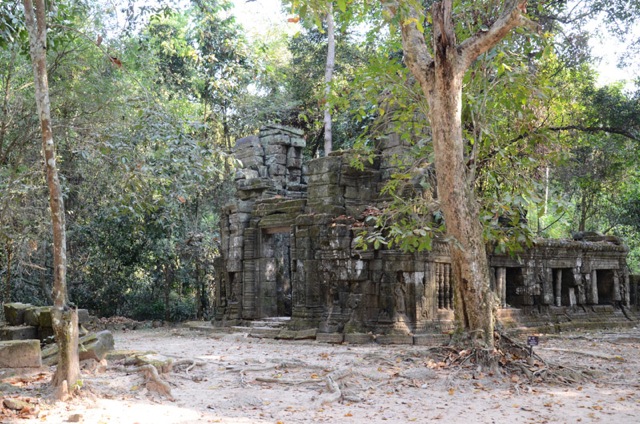
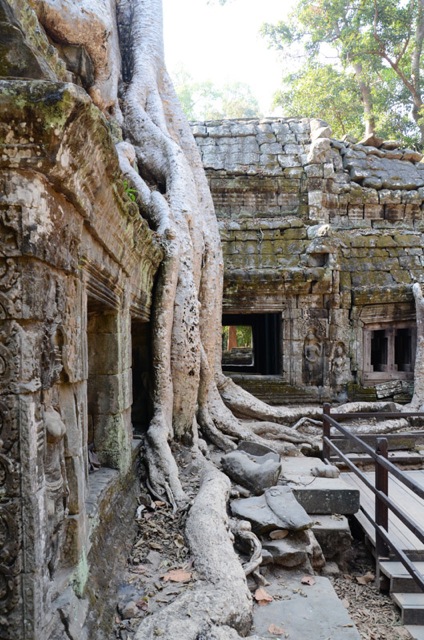
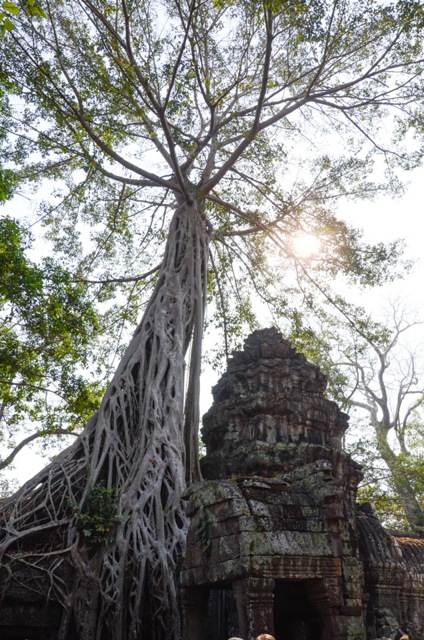
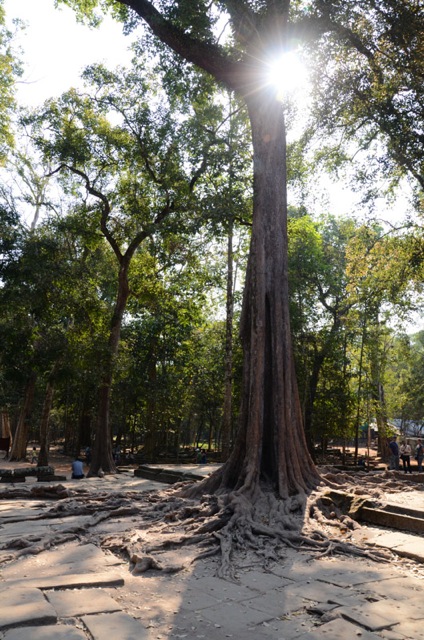
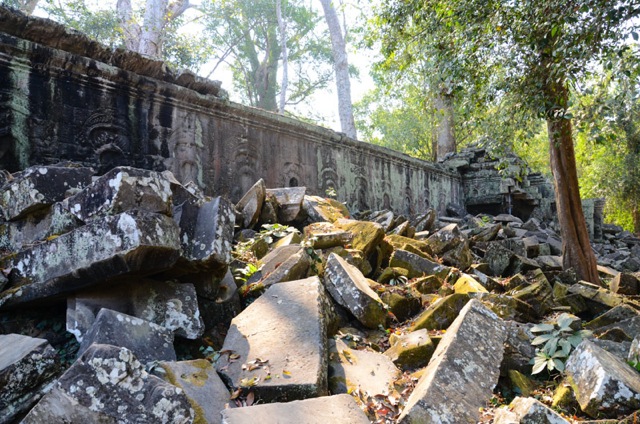
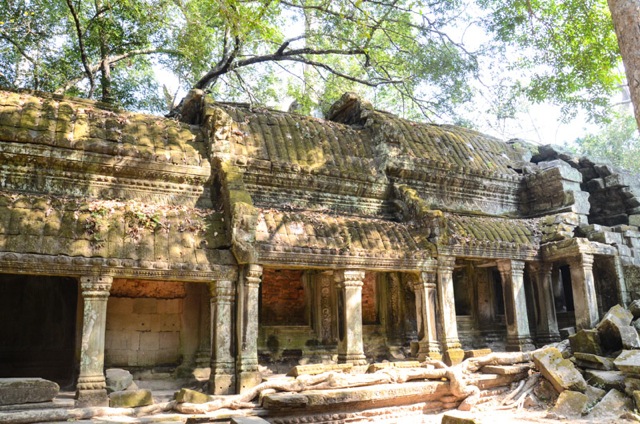
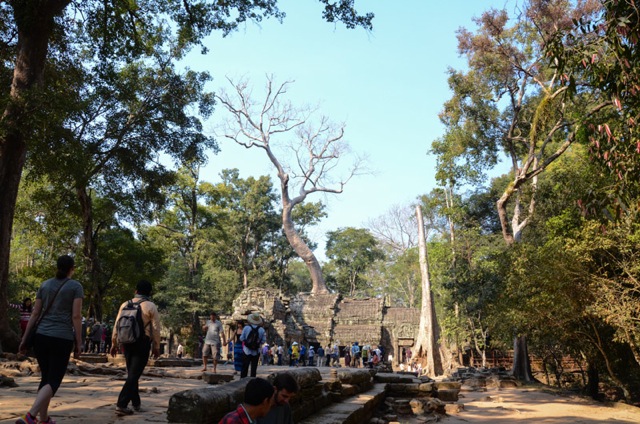
It almost made me feel like an explorer, discovering something unseen for the first time. Except for the all the other tourists that were there of course.
Monday, June 16, 2014
Cambodia: Ta Prohm
Not far from Angkor Wat is the beautiful temple of Ta Prohm. Ta Prohm is famous for being the featured in the movie Tomb Raider. It's also where I tossed my cookies.
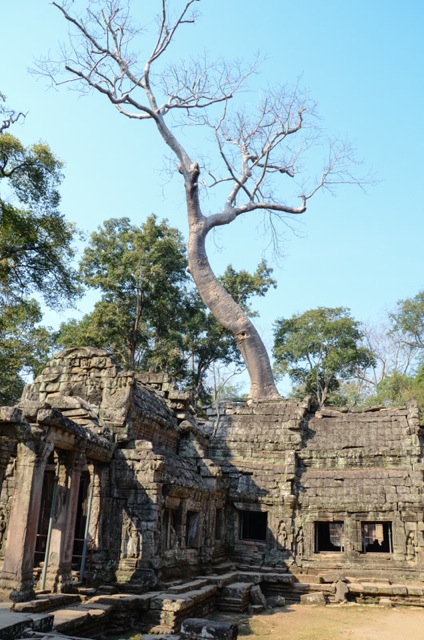
The unique thing about Ta Prohm is that it has been left in much the same condition in which it was found. Trees grow from the top of buildings and the jungle surrounding the temple makes it insanely photogenic.
It almost made me feel like an explorer, discovering something unseen for the first time. Except for the all the other tourists that were there of course.
Thursday, June 12, 2014
Cambodia: Angkor Wat
We visited Cambodia in February during the Spring Festival. However, I've written very little about the trip. Unfortunately, I don't remember most of it. And what I do remember about those first few days, I sort of wish I could forget.
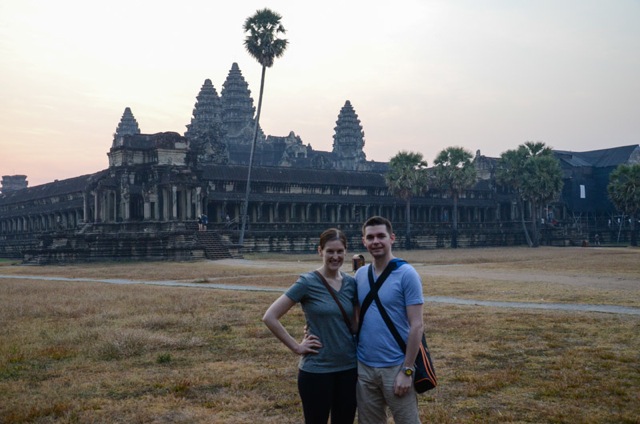
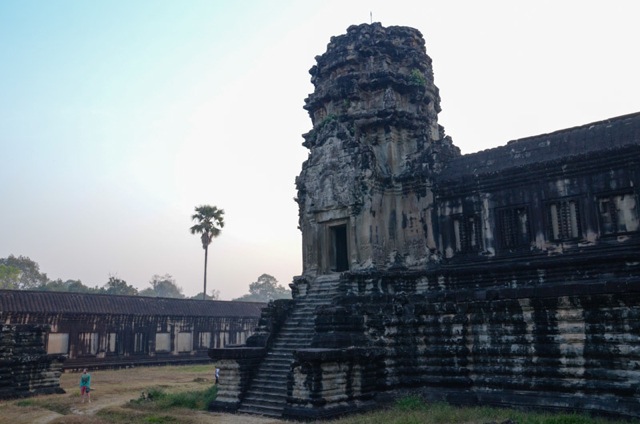
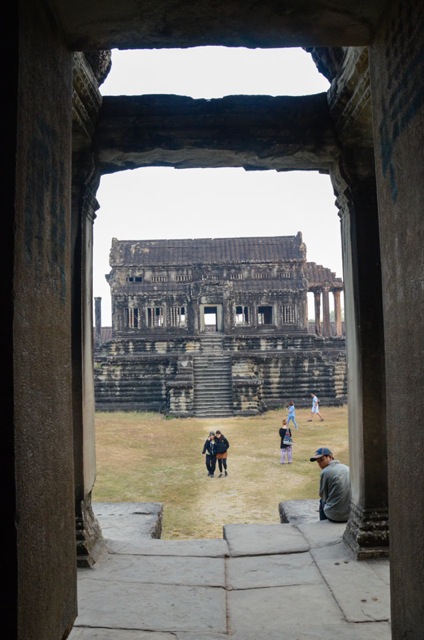
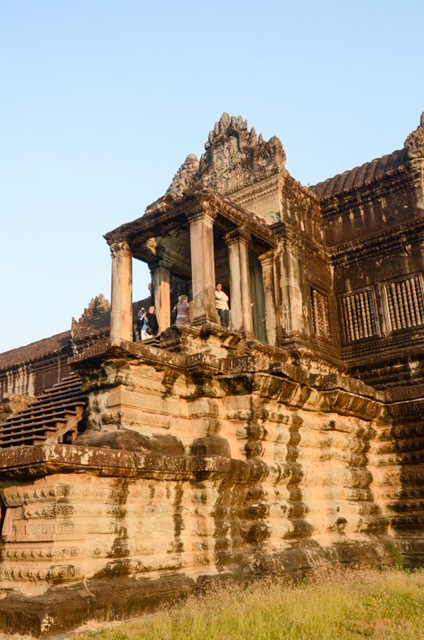
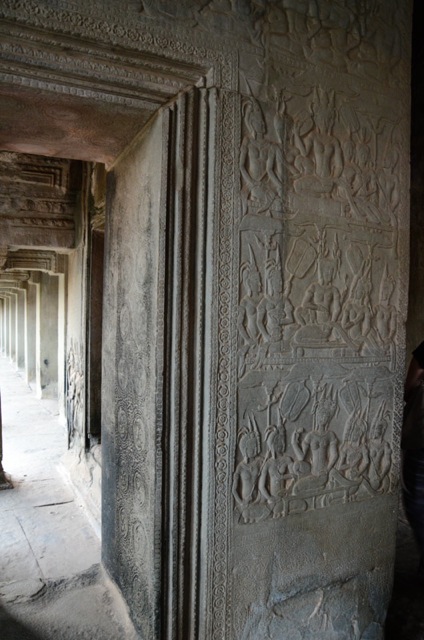
One of the spots I do clearly remember was the Temple of Angkor Wat. Angkor Wat is the largest religious monument in the world and classified as a UNESCO World Heritage Site. Built by the Khmer King during the 12th century (113 BC), the site has served as a Hindu as well as Buddhist temple.
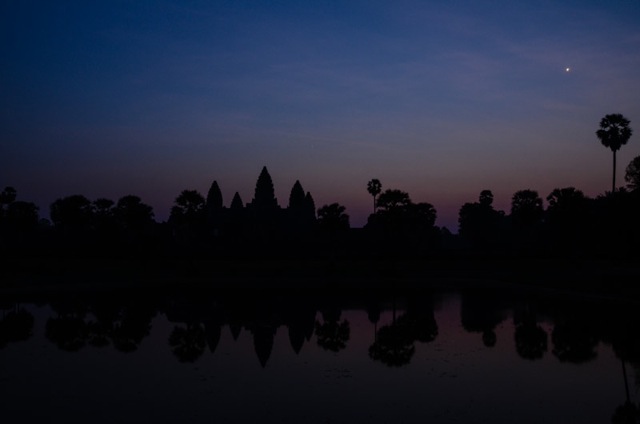
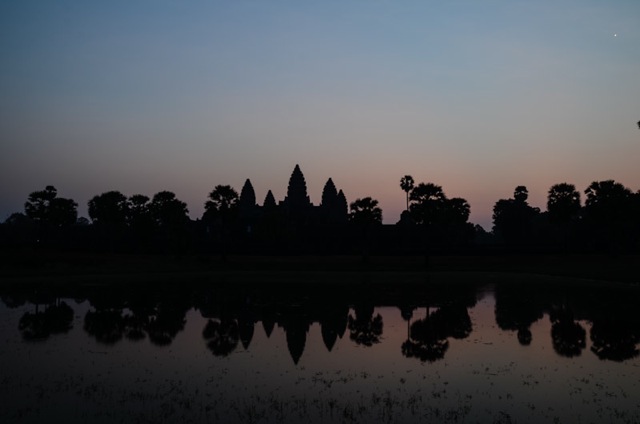
We awoke early and gathered ourselves for a sunrise view of the temple. We had hired a guide who helped us find our way through the vast darkness and waited for the first rays of light to appear.
Slowly, the outline of the temple became visible directly in front of us. As the sun rose, so did the giant towers of the temple.
One of the spots I do clearly remember was the Temple of Angkor Wat. Angkor Wat is the largest religious monument in the world and classified as a UNESCO World Heritage Site. Built by the Khmer King during the 12th century (113 BC), the site has served as a Hindu as well as Buddhist temple.
We awoke early and gathered ourselves for a sunrise view of the temple. We had hired a guide who helped us find our way through the vast darkness and waited for the first rays of light to appear.
Slowly, the outline of the temple became visible directly in front of us. As the sun rose, so did the giant towers of the temple.
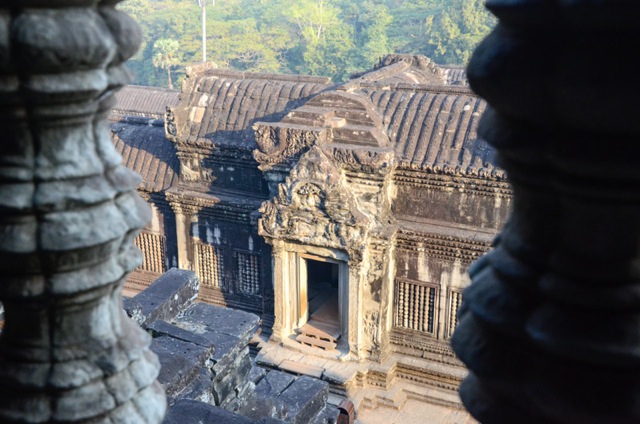
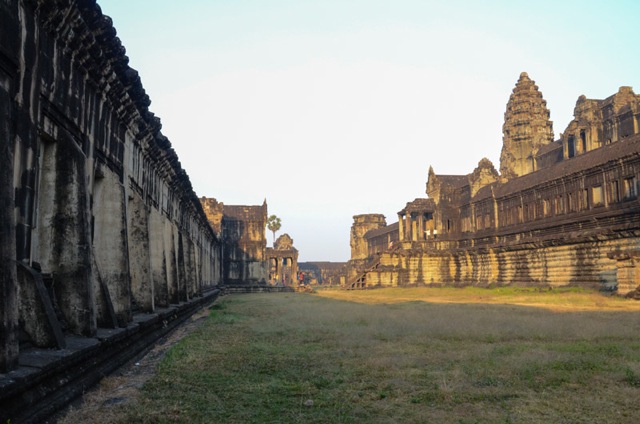
Ankor Wat is nothing short of breathtaking. As someone who has toured a fair amount of temples and ruins, I can easily say this is the most impressive one I have visited. While walking around, I was awed by the size of the structure and by the simple fact that I was privileged enough to be seeing it.
In my opinion, Ankor Wat is best toured with a guide simply because the history surrounding this place is immense. Your inner nerd will thank you.
$20 USD will get you a single day pass to tour Ankor Wat as well as the surrounding temples in the Angkor Archeological Park.
Monday, June 2, 2014
How Local Are You?
Matthew has been teasing my lately that I have become very Chinese. So when I saw this quiz on Urban Family, I thought I would test out his theory. Turns out, I have been acting pretty local. I suppose it's time for a trip back to the States.
How Local Are You?
Questions to test just how much influence China has had on
you.
1. Your family mostly eats food from…
a) the local wet market
b) Lianhua or Carrefour
c) City Shop or Sherpa’s
2. Your ayi brings a live duck to you from her village
after Chinese New Year, you:
a) help her kill it and cook it
b) watch her cook it from the living room
c) freak out, it’s bird flu season and there’s a duck in
your house!
3. The strangest place in Shanghai you’ve changed a diaper is…
a) what diaper? My child wears split pants.
b) in the back of a moving taxi, since my child isn’t in a
car seat
c) in the grass next to the playground at the park
4. When you’re out with your children and one of them shouts, “I need to pee!” with no restroom in sight, you…
a) just let them go on the side of the street
b) look for the nearest tree
c) make them hold it until you find the nearest restroom
5. Your kitchen consists of…
a) a toaster
b) a toaster oven
c) a full-size oven
6. It’s Saturday morning, you’re still in your pajamas,
there’s nothing to eat for breakfast and you decide to go out and get
something, you:
a) head straight out the door, not bothering to change
b) leave your pajamas on, but wear a coat over
c) change your clothes
7. For special occasions, you’re most likely to give:
a) red envelope with cash
b) gift bag with present you bought on Taobao
c) a store-bought present wrapped and tied with a bow
8. When a Chinese grandma comments that your baby isn’t
dressed warmly enough, you:
a) agree with her
b) debate with her
c) smile and walk away
9. At the dinner table, your family is most likely to put:
a) soy sauce on everything
b) chili sauce on everything
c) ketchup on everything
10. Your child was potty-trained at what age?
a) 18 months
b) 3 years
c) 4 years
11. When you cross the street you:
a) cross with authority; those drivers will avoid you if
they know what’s good for them
b) cross when the people around you start to cross
c) wait for the light
12. When someone is talking with you and you want to reply in the affirmative, you:
a) make various “mm” noises, then add, "due, due,
due"
b) nod
c) nod and say, “Yes, I agree”
13. When out at dinner with a group of friends and the check arrives, you:
a) insist on paying
b) break out the calculator
c) say you’ll expense it and ask for the fapiao
Give yourself 3 points for every (a) answer, 2 points
for every (b) answer and 1 point for every (c) answer.
32-39 points = You’re very local. You’ve assimilated
nicely.
26-32 points = Your local friends would be proud, but
you still have a way to go.
Less than 20 points = Fresh off the boat. You’re
living like you never left home.
Friday, May 30, 2014
A Farewell to Friends
There are many wonderful things about being an expat. The chance to live in another country and experience a different culture. The traveling. The food. Oh my god, THE FOOD.
So what isn't so great about being an expat? The goodbyes.
You see, many of us sign on as expats for just a few years. Contracts vary but the vast majority of expats spend two to five years in one place. Sure, there are a few people who are here longer, but many of us simply come for a quick and rather intense tour. Which means that people are constantly leaving and we are repeatedly being forced to say goodbye.
In the next few weeks, I am going to say goodbye to at least 15 people who have been my friends, my support, and my family over the last two and a half years. We've said farewell to others during this time, but this summer's exodus seems to sting the most. Part of it is the sheer number of people leaving. But it's also who is leaving this time around.
There's J, who was my first friend in Shanghai. We moved here within weeks of each other and together, we found the strength to step outside our comfort zones and explore the city. Her family became mine, her daughter like another niece to me. I'm having trouble imagining what Shanghai will be like without them.
L and A, a British couple who not only taught me some bloody good slang, but gifted me with a secret family recipe for Yorkshire Pudding. My thighs will never be the same.
The G family, whose adorable kids make me want to have my own while simultaneously explaining the necessity for a large wine collection.
And then there is L and R, friends who reached out to us through this blog, and who it felt like we had known for years. Their love of good food, stiff drinks, and Ghirardelli brownies made them some of our favorite dining companions.
We've all promised to visit, to keep in touch via Skype and email. And I hope we do. But life is busy and things will change. I know that. Yet I'll forever be bonded to these people. Years from now, I'm sure I will remember the way the Bund looked at night and the taste of xiaolongbao. But the clearest memories even now are the Sunday night dinners spent with friends, the glasses of wine we shared, and the constant laughter that has dominated my life here.
So goodbye my friends. Safe travels to your new homes and best of luck on your next adventures. But most of all, thank you for the memories.
So what isn't so great about being an expat? The goodbyes.
You see, many of us sign on as expats for just a few years. Contracts vary but the vast majority of expats spend two to five years in one place. Sure, there are a few people who are here longer, but many of us simply come for a quick and rather intense tour. Which means that people are constantly leaving and we are repeatedly being forced to say goodbye.
In the next few weeks, I am going to say goodbye to at least 15 people who have been my friends, my support, and my family over the last two and a half years. We've said farewell to others during this time, but this summer's exodus seems to sting the most. Part of it is the sheer number of people leaving. But it's also who is leaving this time around.
There's J, who was my first friend in Shanghai. We moved here within weeks of each other and together, we found the strength to step outside our comfort zones and explore the city. Her family became mine, her daughter like another niece to me. I'm having trouble imagining what Shanghai will be like without them.
L and A, a British couple who not only taught me some bloody good slang, but gifted me with a secret family recipe for Yorkshire Pudding. My thighs will never be the same.
The G family, whose adorable kids make me want to have my own while simultaneously explaining the necessity for a large wine collection.
And then there is L and R, friends who reached out to us through this blog, and who it felt like we had known for years. Their love of good food, stiff drinks, and Ghirardelli brownies made them some of our favorite dining companions.
We've all promised to visit, to keep in touch via Skype and email. And I hope we do. But life is busy and things will change. I know that. Yet I'll forever be bonded to these people. Years from now, I'm sure I will remember the way the Bund looked at night and the taste of xiaolongbao. But the clearest memories even now are the Sunday night dinners spent with friends, the glasses of wine we shared, and the constant laughter that has dominated my life here.
So goodbye my friends. Safe travels to your new homes and best of luck on your next adventures. But most of all, thank you for the memories.
Monday, May 19, 2014
Shanghai Botanical Gardens
Matthew and I first became acquainted with the Shanghai Botanical Garden during our training for the half marathon. It was a great place to run a few miles without having to worry about getting hit by a car. Plus the scenery is nice.
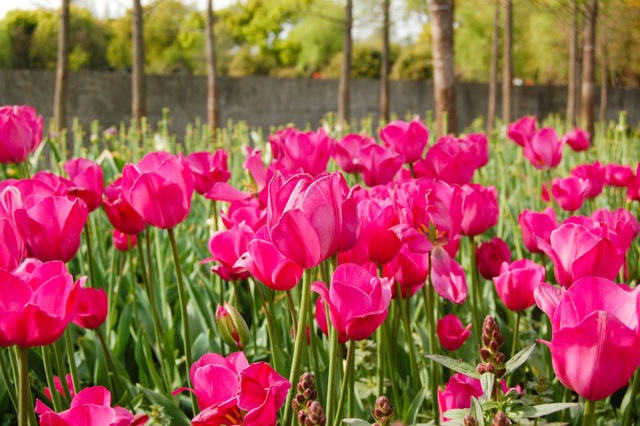
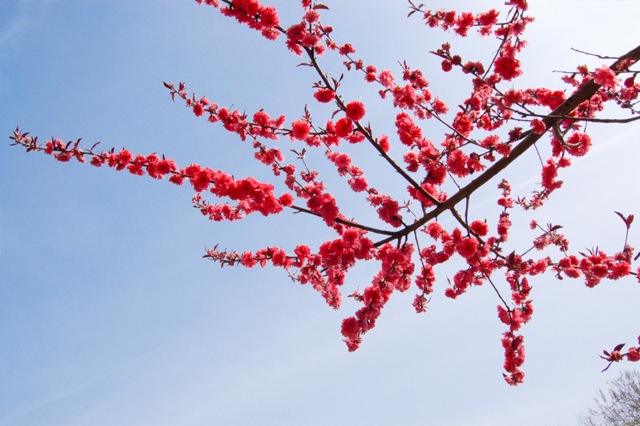
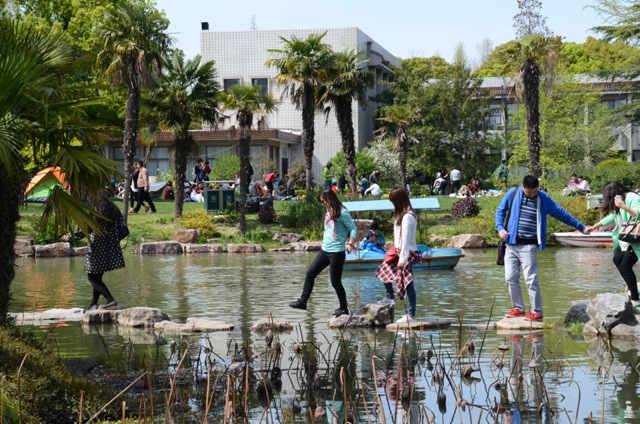
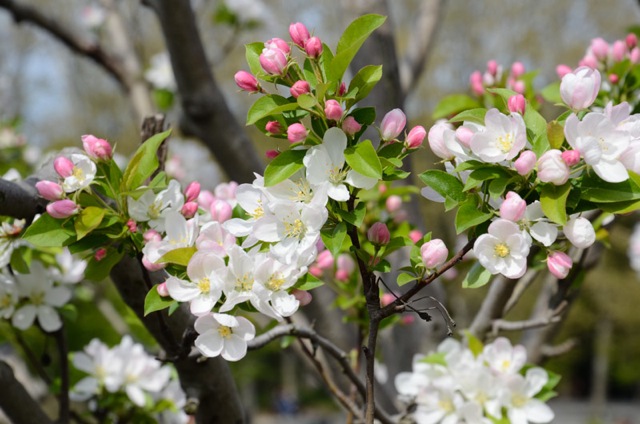
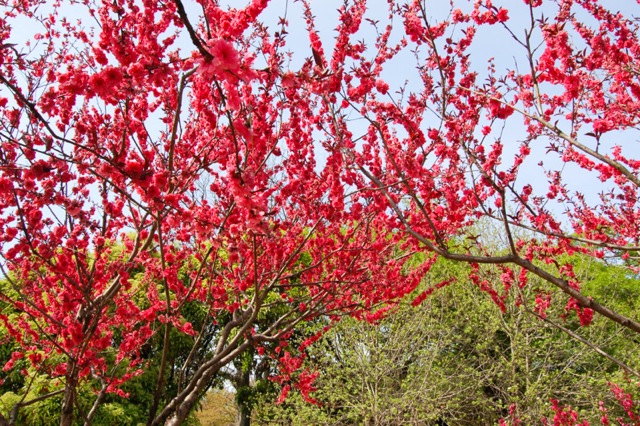
On a beautiful Spring day in April, we decided to visit the gardens once again to catch the cherry blossoms. This time, instead of lacing up our running shoes, we packed a picnic lunch and biked ourselves down to the gardens.
Mobs of other people apparently had the same idea.
Thankfully, the Botanical Garden is massive, covering over 240 acres of land (and holding over 5,000 species of plants) which meant we didn't have to search too hard to find a spot to sit down for our picnic lunch.
Like most parks in China, early mornings are the best time to witness tai chi partitioners, drummers, and community choir performances. You'll also find countless individuals on roller blades as well as the occasional juggler. We once even saw a juggler on rollerblades. Rebel.
The admission fee is 15 rmb to the Garden and 30 to the Conservatory. Or you can get a combined ticket for 40. We've never actually gone into any of the exhibits, but instead prefer to people watch outside.
The Botanical Gardens are located at 1111 Longwu Road, about a 15 minutes walk from the Shanghai South Railway Station Metro station.
On a beautiful Spring day in April, we decided to visit the gardens once again to catch the cherry blossoms. This time, instead of lacing up our running shoes, we packed a picnic lunch and biked ourselves down to the gardens.
Mobs of other people apparently had the same idea.
Thankfully, the Botanical Garden is massive, covering over 240 acres of land (and holding over 5,000 species of plants) which meant we didn't have to search too hard to find a spot to sit down for our picnic lunch.
Like most parks in China, early mornings are the best time to witness tai chi partitioners, drummers, and community choir performances. You'll also find countless individuals on roller blades as well as the occasional juggler. We once even saw a juggler on rollerblades. Rebel.
The admission fee is 15 rmb to the Garden and 30 to the Conservatory. Or you can get a combined ticket for 40. We've never actually gone into any of the exhibits, but instead prefer to people watch outside.
The Botanical Gardens are located at 1111 Longwu Road, about a 15 minutes walk from the Shanghai South Railway Station Metro station.
Thursday, May 15, 2014
Lantern Festival
The Lantern Festival is a festival celebrated on the fifteenth day of the lunar calendar, marking the last day of the Chinese New Year celebrations. (Yes this was back in February, I'm super behind on posts).
The day's main activity is watching lanterns. Throughout the Han Dynasty, Buddhism flourished in China. The legend goes that an emperor heard how Buddhist monks would watch sarira, or the remains from the cremation of Buddha's body, and light lanterns to worship Buddha on the 15th day of the first lunar month. The emperor ordered lanterns to be lit in the imperial palace and temples to show respect to Buddha on this day. Later, the Buddhist rite developed into a grand festival and expanded to the whole of China.
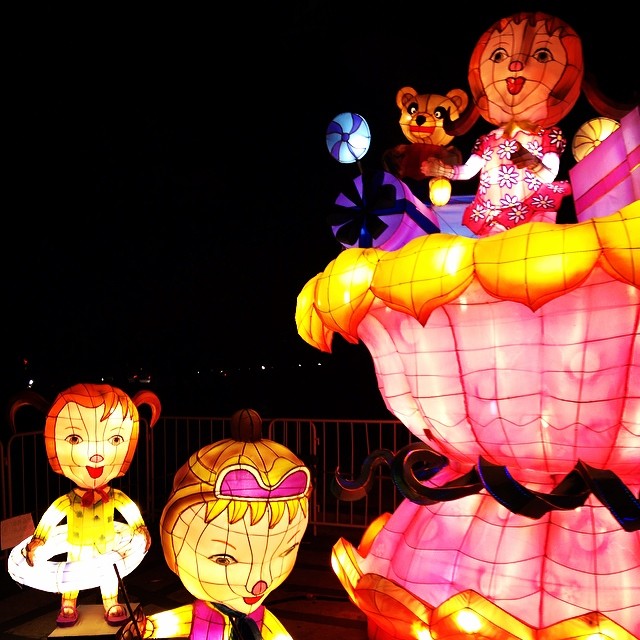
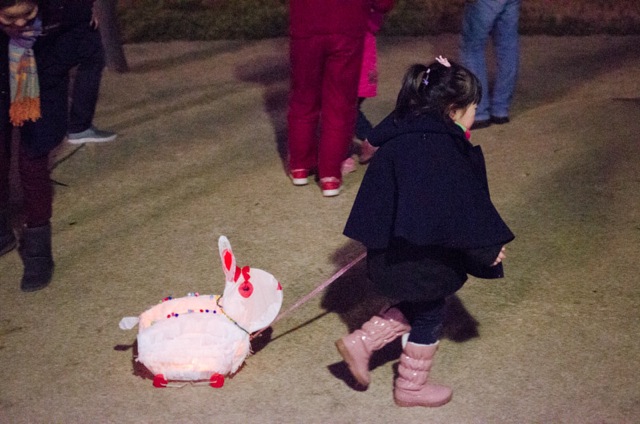
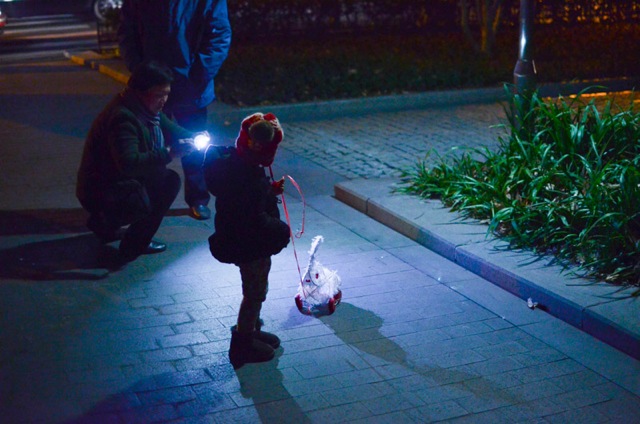
During the Lantern Festival, lanterns of various shapes and sizes are displayed in the streets, parks and temples. Children will hold self-made or bought lanterns and solve riddles on the lanterns. In ancient times, the lanterns were fairly simple, and only the emperor and noblemen had large ornate ones. In modern times, lanterns have been embellished with many complex designs. For example, lanterns are now often made in the shape of animals or are red to symbolize good fortune.
Matthew and I decided to partake in the Lantern Festival near our apartment in Xujiahui Park. The park was crowded with people looking at the large lantern displays, as well as children carrying their personal lanterns.
The day's main activity is watching lanterns. Throughout the Han Dynasty, Buddhism flourished in China. The legend goes that an emperor heard how Buddhist monks would watch sarira, or the remains from the cremation of Buddha's body, and light lanterns to worship Buddha on the 15th day of the first lunar month. The emperor ordered lanterns to be lit in the imperial palace and temples to show respect to Buddha on this day. Later, the Buddhist rite developed into a grand festival and expanded to the whole of China.
During the Lantern Festival, lanterns of various shapes and sizes are displayed in the streets, parks and temples. Children will hold self-made or bought lanterns and solve riddles on the lanterns. In ancient times, the lanterns were fairly simple, and only the emperor and noblemen had large ornate ones. In modern times, lanterns have been embellished with many complex designs. For example, lanterns are now often made in the shape of animals or are red to symbolize good fortune.
Matthew and I decided to partake in the Lantern Festival near our apartment in Xujiahui Park. The park was crowded with people looking at the large lantern displays, as well as children carrying their personal lanterns.
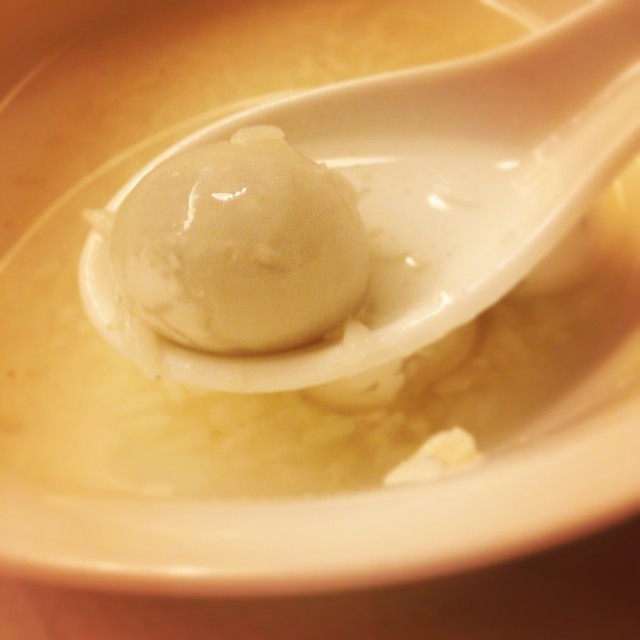
After wandering through the crowds, we made our way back to the apartment for a bowl of tāng yuán, small dumpling balls made of glutinous rice flour filled with rose petals, sesame, bean paste, jujube paste, walnuts, dried fruit, or sugar. Tāng yuán in Chinese has a similar pronunciation with tuán yuán, meaning reunion. So people eat them to denote union, harmony and happiness for the family for the next year.
Or you just eat them because they taste good.
Monday, May 5, 2014
Day Trip: Nanxiang Town
Thursday was Labor Day in China, meaning that we were all
granted with a few days off work. Despite the fear of crowds, we decided to venture
out of downtown to Nanxiang Town in the northern Jiading District of
Shanghai. Nanxiang is a sleepy suburb that boasts attractions such as Guyi
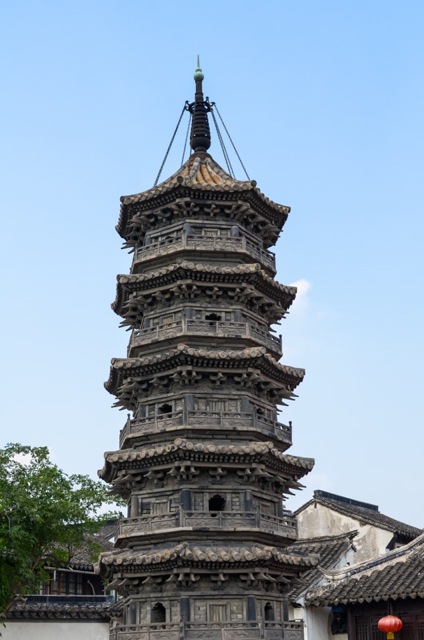
Gardens, Nanxiang Twin Towers, Ancient Town and Yunxiang Temple.
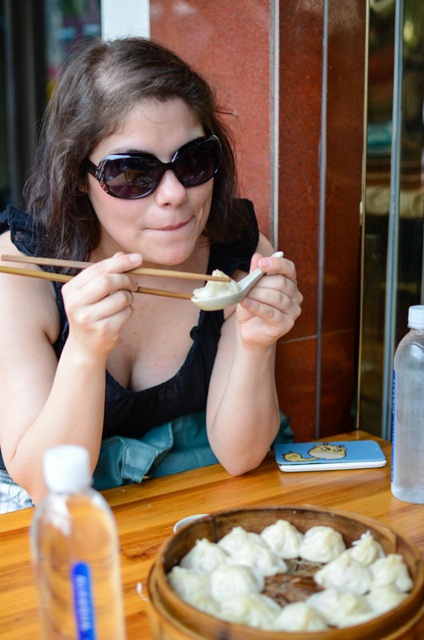
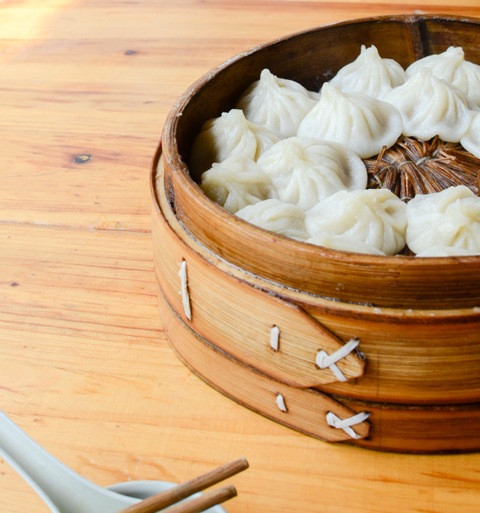
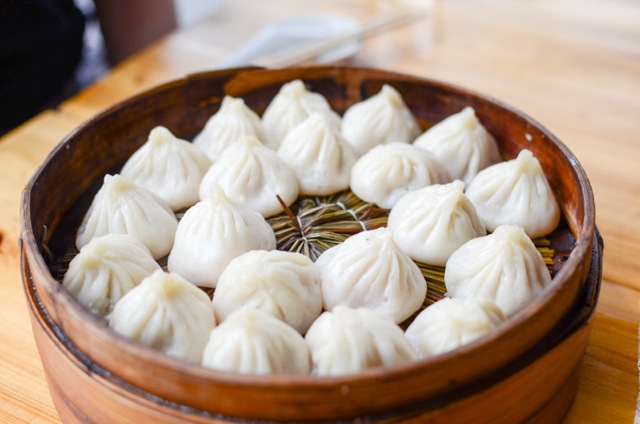
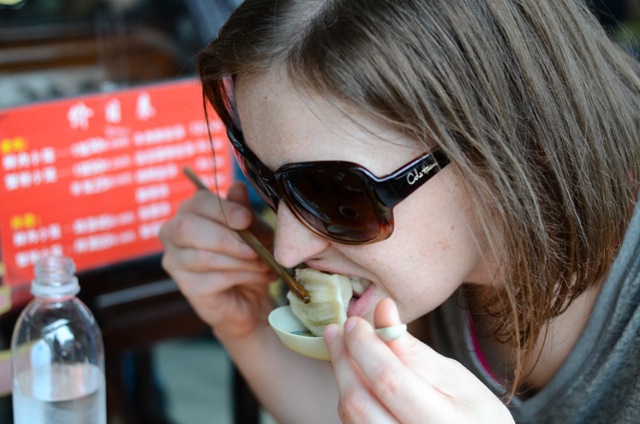
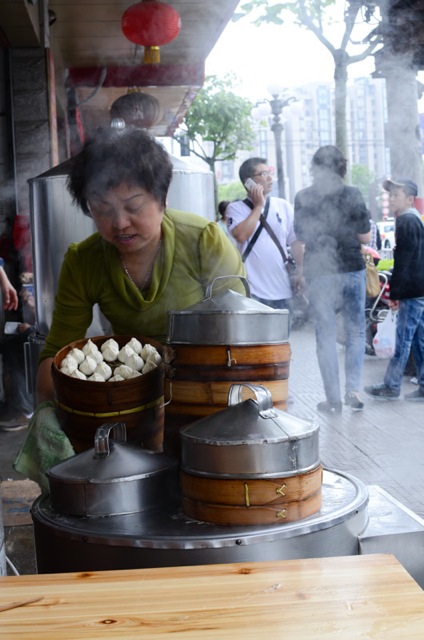
We came for none of these. We hadn’t gone to Nanxiang to sightsee, we were there to eat. Why? Because Nanxiang happens to be the birthplace of xiăolóngbāo.
I’ve talked about my love of these dumplings before and even
suggested a few spots to try them in Shanghai. But eating xlb from the source
seemed like the perfect way to spend an afternoon.
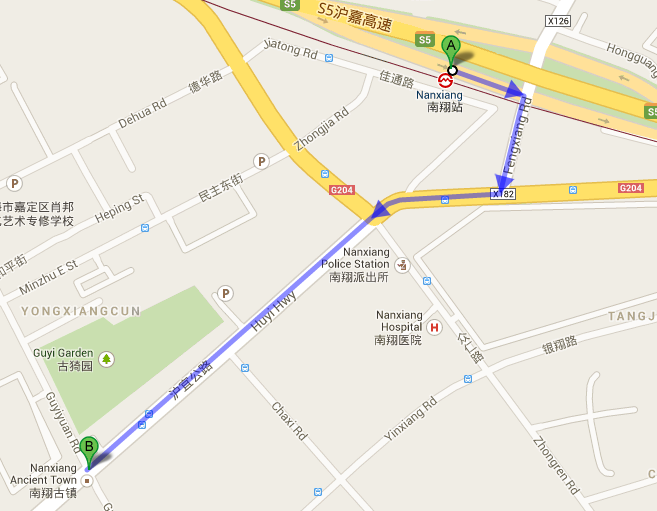
Reaching Nanxiang is easy. Simply take line 11 to the
Nanxiang stop. Once there, take exit 1 and walk south along Huyi Gong Lu for
1.5 km (~10 minutes) to Guyi Garden. A short distance after that, you’ll
encounter Guyiyuan Lu, which is where our culinary adventure began.
I’m not joking when I say there are hundreds of xlb
restaurants in Nanxiang. Hundreds. For the purpose of research, we ate at three
restaurants. I’m clearly conducting a very scientific experiment.
Our first stop was the shop on the corner. Overly thin skins
combined with overcooked dumplings meant that our xlb stuck to the steamer and
ripped when picked up. Would not recommend.
The second spot was the famous Gulong Restaurant (220
Guyiyuan Lu). While Nanxiang town may be the birthplace of xlb, Gulong is
apparently the actual spot of creation. The dumplings here were beautifully
prepared. The dough was slightly thicker and the flavor was sweet and savory. These were
voted the best by our panel. FYI, the panel consisted of me, Matthew, and our
friend C.
Our third stop was slightly further down Guyiyuan though I failed to notice the name. This restaurant offered numerous types of xlb and we opted for original pork as well as the crab variety. The crab version was a big hit and I quite liked the pork as well. These xlb received slightly less enthusiastic praise than the ones at Gulong, but we were also rather stuffed at this point. I think we had ordered and consumed close to 60 dumplings at this point.
I can feel you judging me.
Since we only sampled from a few restaurants, I have a
feeling I will visit Nanxiang again. All in the name of research of course.
Subscribe to:
Posts (Atom)