Showing posts with label festivals. Show all posts

Thursday, May 15, 2014

Lantern Festival

The Lantern Festival is a festival celebrated on the fifteenth day of the lunar calendar, marking the last day of the Chinese New Year celebrations. (Yes this was back in February, I'm super behind on posts).

The day's main activity is watching lanterns. Throughout the Han Dynasty, Buddhism flourished in China. The legend goes that an emperor heard how Buddhist monks would watch sarira, or the remains from the cremation of Buddha's body, and light lanterns to worship Buddha on the 15th day of the first lunar month. The emperor ordered lanterns to be lit in the imperial palace and temples to show respect to Buddha on this day. Later, the Buddhist rite developed into a grand festival and expanded to the whole of China.
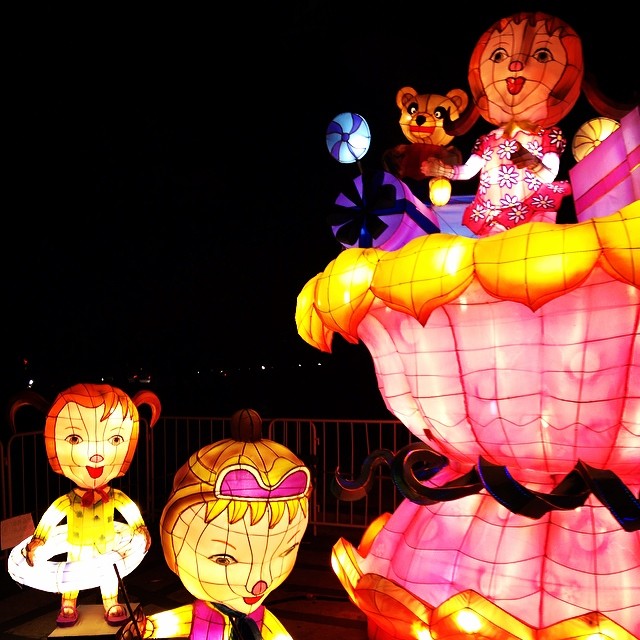
Lantern Festival in Xujiahui Park #cny

During the Lantern Festival, lanterns of various shapes and sizes are displayed in the streets, parks and temples. Children will hold self-made or bought lanterns and solve riddles on the lanterns. In ancient times, the lanterns were fairly simple, and only the emperor and noblemen had large ornate ones. In modern times, lanterns have been embellished with many complex designs. For example, lanterns are now often made in the shape of animals or are red to symbolize good fortune.
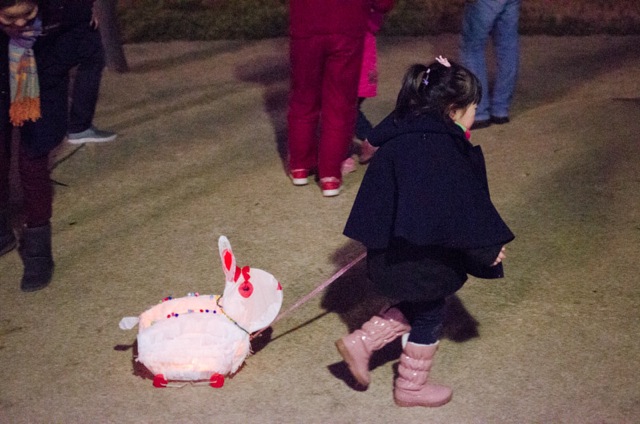
Fwd:

Matthew and I decided to partake in the Lantern Festival near our apartment in Xujiahui Park. The park was crowded with people looking at the large lantern displays, as well as children carrying their personal lanterns.
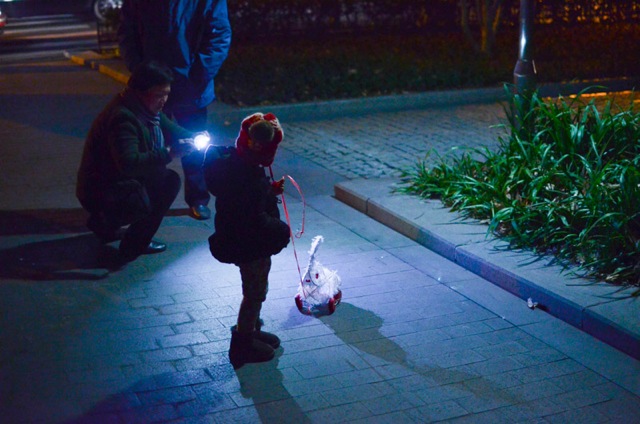
DSC_5495.jpeg 

After wandering through the crowds, we made our way back to the apartment for a bowl of tāng yuán, small dumpling balls made of glutinous rice flour filled with rose petals, sesame, bean paste, jujube paste, walnuts, dried fruit, or sugar. Tāng yuán in Chinese has a similar pronunciation with tuán yuán, meaning reunion. So people eat them to denote union, harmony and happiness for the family for the next year.
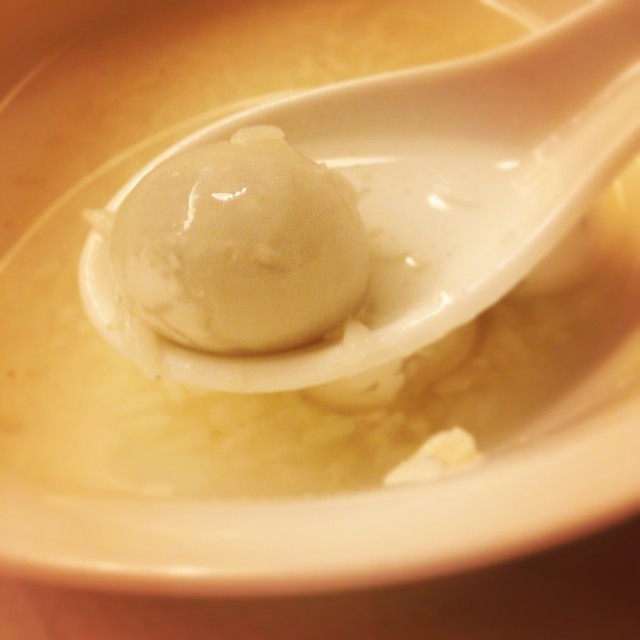
Celebrating the last day of CNY with some tang yuan

Or you just eat them because they taste good.

Tuesday, February 4, 2014

Harbin: Ice and Snow World

The Ice and Snow World is the main attraction to visit during the Harbin Ice Festival. Roughly 7,000 artists use over 4 million cubic feet of ice to transform Sun Island into a frozen architecture park. Much of the inspiration for the ice and snow sculptures is derived from traditional Chinese fairy tales or world famous architecture. 

Harbin - Ice and Snow World

For this year's 30th anniversary of the festival, recreations of New York’s Empire State Building, Rome’s Colosseum, Reykjavik’s Hallgrimskirkja Church and the Great Wall of China were all on display.

Harbin - Ice and Snow World

Harbin - Ice and Snow World

Each of the buildings are carved from ice using picks, chisels, saws and lasers, resulting in a magical frozen wonderland.

image

This ice thermometer shows off the negative temperatures we braved to climb (and slide down) the ice castles.

Harbin - Ice and Snow World

Harbin - Ice and Snow World

Harbin - Ice and Snow World

Harbin - Ice and Snow World

Harbin Ice and Snow World

Harbin - Ice and Snow World

Entrance tickets run 300rmb/person and the best time to visit is after dark. Ask your cab driver to wait for you as finding one after can be a nightmare. It's a common practice and will only cost you an extra 50 rmb on your fare.

Thursday, January 30, 2014

Harbin: Songhua River

We spent the afternoon of our second day in Harbin playing on the frozen Songhua River. The river is coated with over 3 feet of ice (~1 meter) in early November and remains this way until April each year.

Harbin - River

I'm told the Songhua has more visitors in the winter than the summer. It's hard to argue with this statement when you witness the hundreds of people skating, sliding, and riding dog or horse drawn sleds on the surface. There were even a few brave souls who thought swimming in a carved out pool was a good idea. While I did once go skinny dipping in a lake in January while in college, I thought better of it this time around. And I hadn't consumed nearly as much beer.

Harbin - River

Harbin - River

Harbin - River

There were a few of these cute Arctic foxes that you could pay to hold, but as I am against animal tourism (unless it serves as a rehabilitation or research center), I opted not to cuddle these furry critters.

Harbin - River

Walking on the river is free though I'd recommending paying to ride one of the slides near the entrance. It will pop you out among the main action and give you a reason to squeal for a few minutes.

Tuesday, January 28, 2014

Harbin: Zhaolin Park

Zhaolin Park

After the sun set on our first day, we visited the Lantern Festival at Zhaolin Park. I quite liked this small, peaceful park, but it pales in comparison to the larger Snow and Ice World. If you are in Harbin for only one night, skip this smaller version.

Harbin Zhaolin Park 

Ice lanterns have been used in Harbin for hundreds of years. Originally, they were carved by fishermen to use at night when fishing on Songhua River. They evolved into decorations in front of homes and are now embraced as an art form. Artists from around the world come to carve sculptures out of huge blocks of ice, cut from the local river.

Zhaolin Park

Harbin Zhaolin Park

Zhaolin Park

Harbin Zhaolin Park 

Harbin Zhaolin Park

Zhaolin Park 

Entrance to the multiple parks is not cheap. Expect to pay 200 rmb/person after dark at Zhaolin Park. While you can save some money by visiting during the day, you'd also miss out on the lights.

Monday, February 11, 2013

Xīn nián kuài lè

Happy New Year and welcome to the year of the snake! At first, I thought Chinese New Year was going to be my new favorite holiday. Because you're pretty much required to eat dumplings and set off fireworks. For the equivalent of $20 USD we purchased some exploding bombs that I was terrified would blow off our fingers.

DSC_0416

DSC_0429

DSC_0511

DSC_0696

DSC_7741_edit

DSC_0833

And for the first few hours, it was my new favorite holiday. But the fireworks didn't end at midnight. Or 3am. Or even 6am. I've been listening to fireworks burst for the past 12 hours and both the cat and I have fried nerves. So while I enjoyed the first few hours of Chinese New Year, I think I'll be booking a flight to somewhere tropical next year.

Friday, September 28, 2012

Moon Festival

Sunday marks the date of the Mid-Autumn or Moon Festival in China. The festival is held to honor the moon as well as the legend of Chang Er. One of the more popular versions of the story states that the earth once had ten suns circling over it, each taking its turn to illuminate the earth. One day, all ten suns appeared together, scorching the earth with their heat. The earth was saved by an archer, Hou Yi, who shot down nine of the suns. One day, Hou Yi stole the elixir of life from a goddess. In order to save the people from her husband's rule, his wife, Chang Er, drank the elixir of life. After drinking it, she began floating and flew to the moon. Hou Yi loved his wife so much, he refused to shoot down the moon.

Later, the Moon Festival would gain additional significance. During the Yuan dynasty, China was ruled by the Mongolian people. Leaders from the preceding Sung dynasty set out to coordinate a rebellion without it being discovered. The leaders of the rebellion, knowing that the Moon Festival was drawing near, ordered the making of special cakes. Baked into each moon cake was a message with the outline of the attack. On the night of the Moon Festival, the rebels successfully attacked and overthrew the government. What followed was the establishment of the Ming dynasty. 

 
Today, moon cakes are eaten to commemorate this legend and are given as gifts prior to the start of the Moon Festival. Traditional moon cakes are filled with red bean or lotus seed paste and often with the yolk of a salted duck egg.
 
 
 The moon cakes we received from our housing complex were filled with traditional red bean paste, similar to the filling of the qingtuan (I liked the moon cakes much better though).

 Snowball was also a fan

 
 Matt's company gifted us with a more modern take on the moon cake

 Can you guess which version I preferred?

Tuesday, September 18, 2012

Fear The Jalapeno

This weekend, Matthew and I were members of a team competing in Shanghai's annual chili cook-off. Though to be honest, we mostly provided moral support, and some tasty cornbread, since neither of us are beef eaters. Before I get into the meat of our weekend (yes, I went there), I first wanted to thank one of my sweet readers who approached me at the cook-off. Whether she knew it or not, when Anne-Marie asked if I was the writer of this blog, she totally made my day. I was so shocked to have someone other than a family member or friend mention reading my blog that I just stared at her for a moment. So thanks to Anne-Marie for making me feel like a little bit of a Shanghai celebrity (And feel free to check out her Shanghai adventures over on her blog as well. She provides a pretty funny look at teaching in China).

I'll be the first to admit that I know very little about chili or chili cook-offs for that matter. And this wasn't just any chili, it was Texas chili, a concept I was even more unfamiliar with. Apparently Texas chili is made entirely of meat and spices. Adding beans is a capital offense. And of course, our team consisted solely of expats hailing from New York and Ohio who had never even heard of Texas chili before.

This year, the cook-off was officially sanctioned by CASI, the Chili Appreciation Society International, which is apparently a big deal. This meant that the top three finishers qualified to attend CASI’s International Chili Championship held in Terlingua, Texas.

So how did our team, Jalapeno Dave's, do? With a third place finish, Dave will be off to Texas in November.

Monday, April 2, 2012

Qingming

Wednesday marks the festival of Qingming or Tomb Sweeping Day. For the Chinese, Qingming is a time when families honor their ancestors by gathering at their grave sites and literally sweeping the tombs. They will also offer gifts like food, tea, wine, and burn paper accessories they believe the deceased might need in the afterlife. However, Qingming is not only a day of remembrance. It has also become a day to celebrate the coming of spring, often by participating in outdoor activities and flying kites.

One of the traditional foods eaten during Qingming is the qingtuan. It is a very green, glutinous rice ball, traditionally filled with bean curd. Qingtuan dates back over 2,000 years to the Zhou dynasty.


While popular all year, tuan are readily available leading up to Qingming. The day prior to Qingming is another ancient event, Hanshi, which means cold food. Traditionally, only cold foods are eaten during this time, of which qingtuan is the most popular.

While we won't be sweeping any graves, we do plan to spend our Qingming holiday outdoors while checking out some local street fairs and hunting down the best qingtuan in town (the one pictured above was definitely not it).
Related Posts Plugin for WordPress, Blogger...