Showing posts with label Shanghai Travel. Show all posts

Wednesday, October 15, 2014

Hiking Huangshan or How I Made Myself Sore For 5 Days

When Matthew and I realized that our time left in China was limited, we began scheduling lots of weekend trips. One of those trips was to Yellow Mountain, or Huangshan.

DSC_0803.jpeg

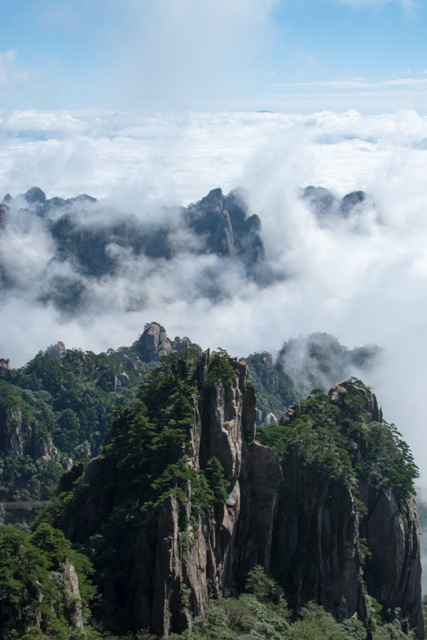
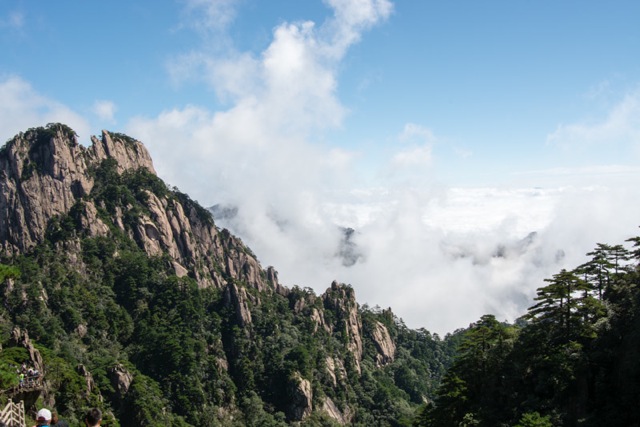
Before heading to Huangshan, I wrongly thought that Yellow Mountain was a single mountain. But in reality, Huangshan refers to an entire mountain range in southern Anhui province.

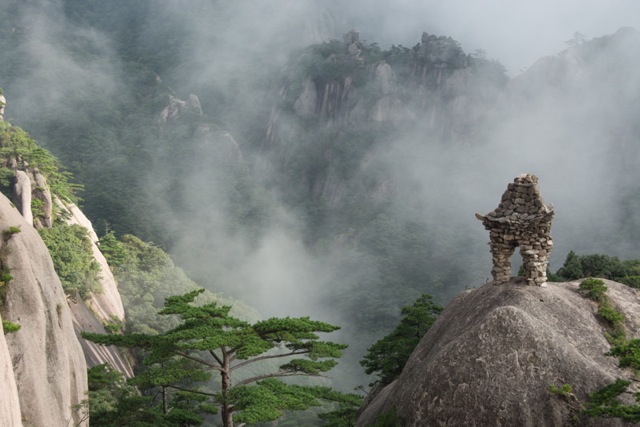
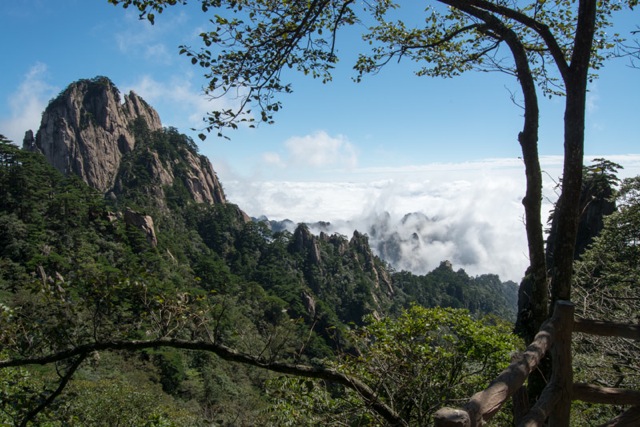
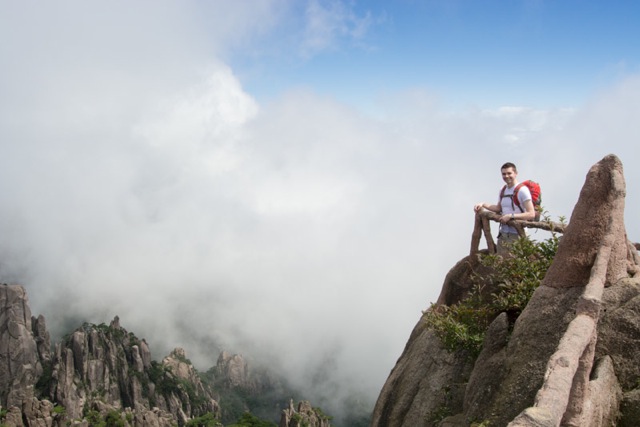
There are literally hundreds of peaks and thousands of ravines in the Yellow Mountains, 72 of which have been named. Heavenly Capital Peak (1800m), Lotus Flower Peak and Bright Summit (1841m/6040ft) are the three major peaks, all rising more than 1,800 meters (5,900 feet) above sea level. That means that at times, I was standing next to a cliff that dropped down over a mile. For this heights adverse gal, the trip was often harrowing.
DSC_0910.jpeg

We arrived Friday night and spent some time exploring Tangkou, the town situated at the bottom of the mountains. That took about 10 minutes because Tangkou is TINY. With more time than we knew what to do with, we took the suggestion of our hotel and headed to the hot springs to relax for a few hours. Heaven. My only regret is that we visited the hot springs prior to ascending the mountain and not after. But soaking in a pool of hot water scented with wine and coconut milk wasn't a bad way to spend a Friday night.

Early the next morning, we joined the masses in line to take the buses into the park. As Huangshan is a national park, the only way to enter is on foot or via the National Express bus. We arrived at the Yungu Cable Car or Eastern Steps and then rode the cable car to the top. I don't remember much of the 12 minute cable car ride, though Matthew claims it was beautiful. I had my head between my knees and was trying to ignore the Chinese people pointing at the foreign girl who was freaking out. Like I said, I don't do heights.
DSC_0812.jpeg

After nearly meeting my death (I'm sure the cable cars are totally safe, but it FELT like I was going to die at any moment), we spent a few moments getting our bearings and then began the hour long hike to our hotel. Some of the best views on Huangshan are sunrise and set, and staying on the mountain meant that we could enjoy them.
DSC_0826.jpeg

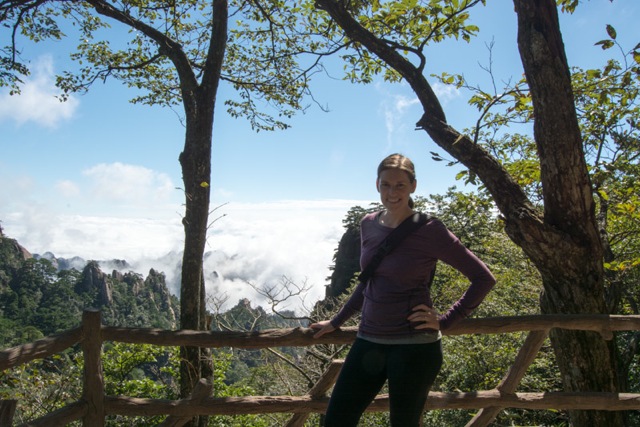
We arrived at our hotel only to find there was a small snafu with our room, as in they didn't have one for us. But we were able to sort things out and received free accommodations in the single sex dorm rooms. Not what we had planned but it just added to the experience. We dropped off our bags and started off on another hike.
DSC_0843.jpeg

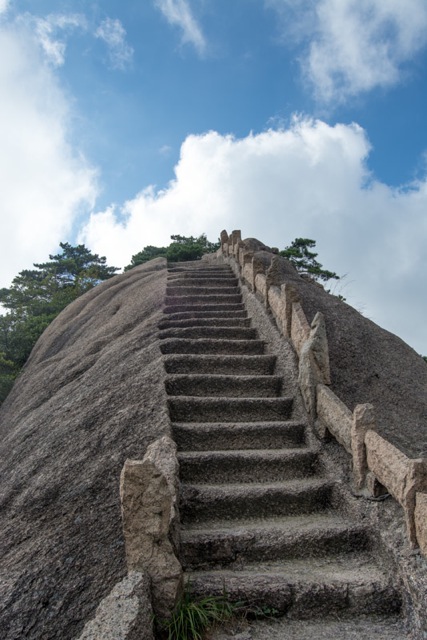
We then spent the next five hours going up paths that looked like this:

DSC_0992.jpeg

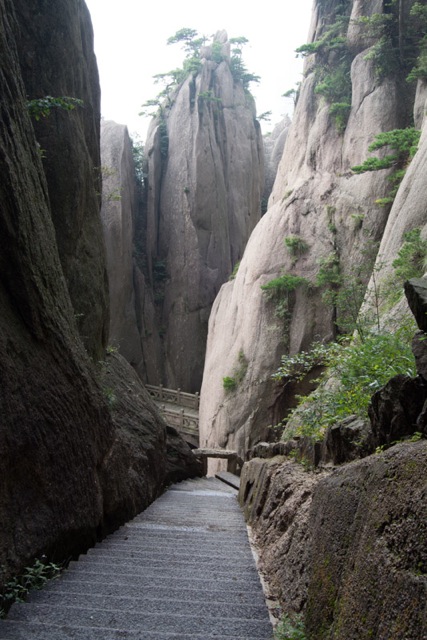
And down stairs that looked like this:
DSC_1021.jpeg

It was beautiful, thrilling, and at times terrifying. The guard rails were only often knee high and a small stumble could send you tumbling over the side of a mountain. Thankfully, while there were thousands of other tourists with us on the mountains that day, the crowds thinned considerably once we were away from the cable cars. At one point, we hiked for over an hour without seeing another soul.

DSC_1034.jpeg

Our original plan had been to watch the sunset at Fairy Walking Bridge, but once we made our way there, we knew there was no chance we would want to hike back the same way in the dark. We instead headed back up the trail, closer to our hotel and settled in for the show.

DSC_1100.jpeg

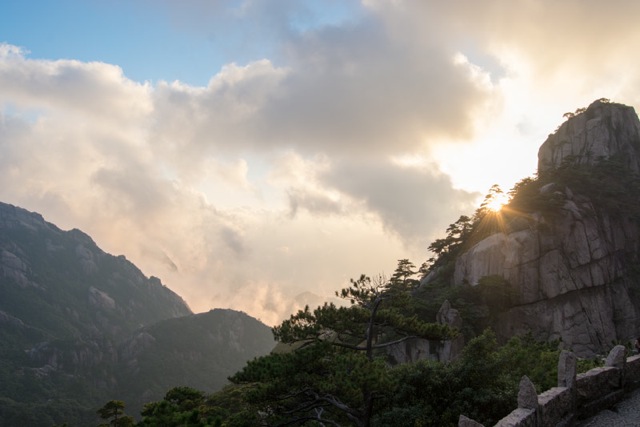
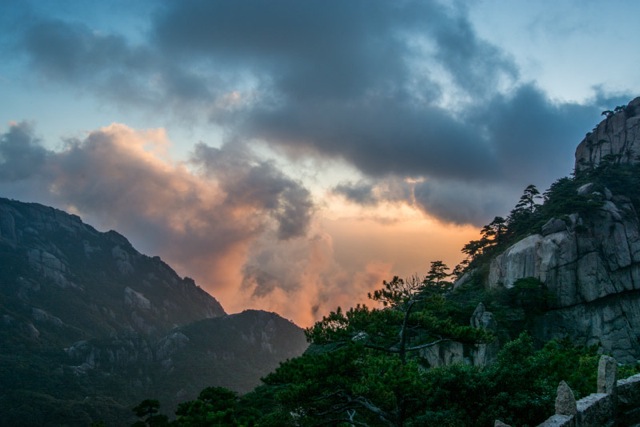
We could see the masses of people sitting far away on Bright Top, but enjoyed our empty spot along the trail, even if the sun disappeared behind a mountain before it reached the horizon.

DSC_1139.jpeg

As the darkness began to settle, we headed to our hotel for showers and much needed food. We had managed to skip lunch amid the hotel mixup and were famished after over 6 hours of hiking.
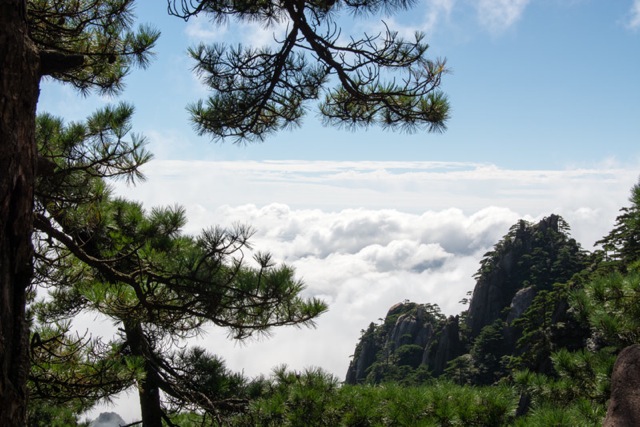
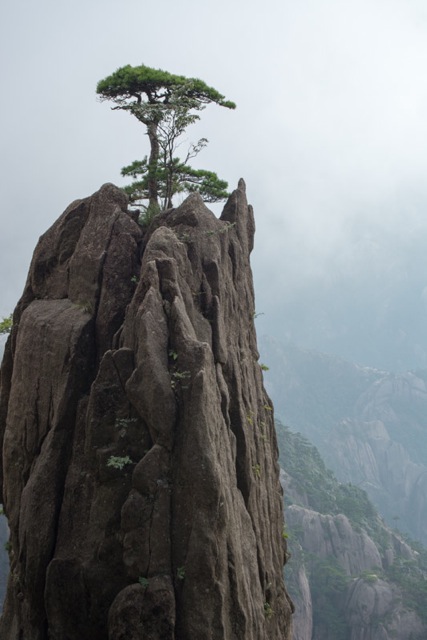
DSC_0836.jpeg

Staying in the hostel section of the hotel meant that we had little choice as to when we awoke the next morning. At exactly 4am, the lights in my room came on and everyone began to prepare for sunrise. We slipped on some thermals (despite wearing shorts during the day) and joined the masses en route to Bright Top. Why isn't there a photo of the sunrise in this post? Because there wasn't much of one. Thick fog and crowds of people meant that we couldn't even get close to seeing the sun come up. Back in our rooms, we showered and prepared for another long day.

DSC_1017.jpeg

We spent the next five hours hiking down the Western Steps of Huangshan. While Saturday had given us blue skies and beautiful views, Sunday proved to be wet and foggy. But it meant the trails were fairly empty and the temperatures were moderate on the way down. Around noon, we arrived at Mercy Light Pavilion and happily jumped on a bus back to Tangkou. As our flight to Shanghai was not until much later that evening, we checked into a hotel for showers and an afternoon nap. After we devoured a bowl of noodles that is.

DSC_0840.jpeg

Afterwards, we realized we had walked over 13 miles/21 km, mostly on stairs, over the two days on the mountains. I consider myself to be in fairly good shape (I teach 2 spin classes and run an average of 15 miles a week, plus I'm about to run my third 1/2 marathon in a year), and I have to tell you, Huangshan was no joke. While I never felt unable to make it, I was sore when we woke up on Sunday. And I was even more sore Monday morning. In fact, I found it hard to go down stairs even on Thursday. But the views? Well, they made everything worth it.

Tuesday, July 1, 2014

How to: Ride the Bus

I love the bus system in Shanghai. It's easy, it's convenient, and it costly a measly 2 rmb (that's .32 US cents) to ride.


To be honest, it took me awhile to have the confidence to ride the bus. When we first moved here, I stuck to the metro system because 1) I didn't have to talk to anyone and 2) signs were clearly marked in English. But once I realized how simple the bus system was, my love affair with another form of public transportation began.

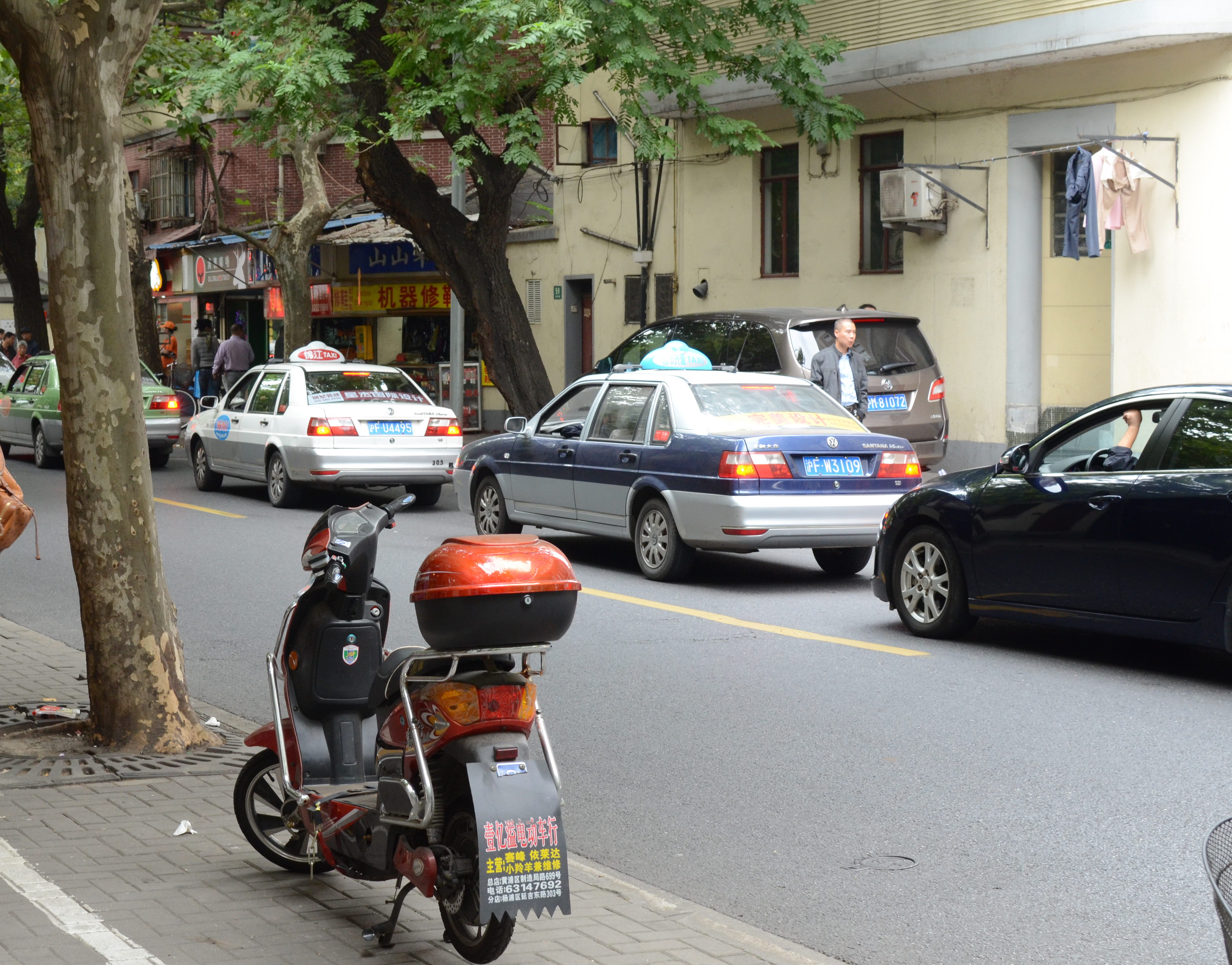
Shanghai's public bus system is quite comprehensive with more than 1,100 lines that run all over the city. Stops are generally located near intersections, with each stop named after the closest street intersecting the road the bus is running on. The stops are generally indicated with a black post with number signs on it. There is a number sign for each line the bus serves.


Each sign shows the route number, the bus stop name and the next stop, all in Chinese. But that doesn't mean you can't still figure it out. You just have to plan your trip in advance.

Determine Your Route
Personally, I use Google Maps to plan out my trip. You can also use Baidu Maps but it's a little trickier as it is in Chinese.

You start by simply typing in the route you want to take. You can use either landmarks or specific addresses. Then you select the public transportation option, indicated by the bus icon circled below.


Select "Get Directions" and you are given options for public transportation that will help you get from point A to B.


You will notice that numerous routes and methods are given to you. I generally try to take the quickest route, but am willing to deviate from my plan if one of the other buses comes along first. 


If you happen to know which buses pass by the stop you want to take (as indicated on the sign posts), you can also check out this Shanghai Bus Route website, which offers English route information for each specific bus.

Paying Your Fare
Board the bus through the front door and put the bus fare into a money box beside the driver or scan your metrocard. Drivers will not make change so ensure you have the exact amount before boarding the bus.

Ride Like A Regular
You will see several yellow seats on each bus. They are reserved for senior citizens, small children, the sick, disabled and pregnant women. You are welcome to sit in them, but remember to give your seat up if one of the above mentioned is left standing.


Air-conditioned buses can be identified by an snowflake symbol in front of the bus number. In the summer, you only want to get on an air conditioned bus.


Getting Off
Most of the buses announce in both Chinese and English and many have a screen displaying the stops at the front of the bus. Simply listen/look for your stop and exit from the backdoor when you arrive at your destination.

Overall, the bus system in Shanghai is fairly simple. Challenge yourself to step outside your comfort zone and ride the bus the next time you are meeting friends for dinner. Or when your walk to the nearest metro line suddenly feels entirely too long.

Monday, May 5, 2014

Day Trip: Nanxiang Town

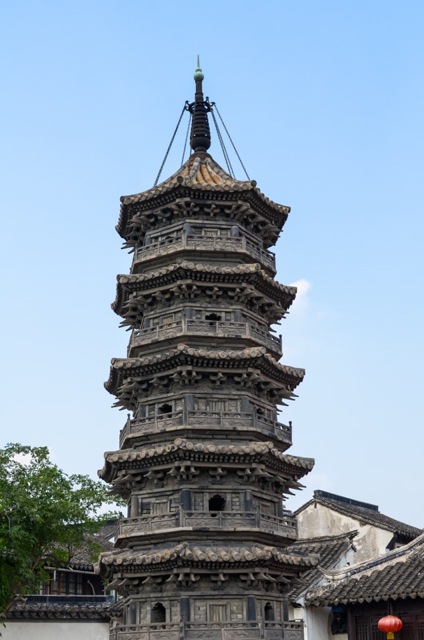
Thursday was Labor Day in China, meaning that we were all granted with a few days off work. Despite the fear of crowds, we decided to venture out of downtown to Nanxiang Town in the northern Jiading District of Shanghai. Nanxiang is a sleepy suburb that boasts attractions such as Guyi Gardens, Nanxiang Twin Towers, Ancient Town and Yunxiang Temple.

DSC_6420.jpeg

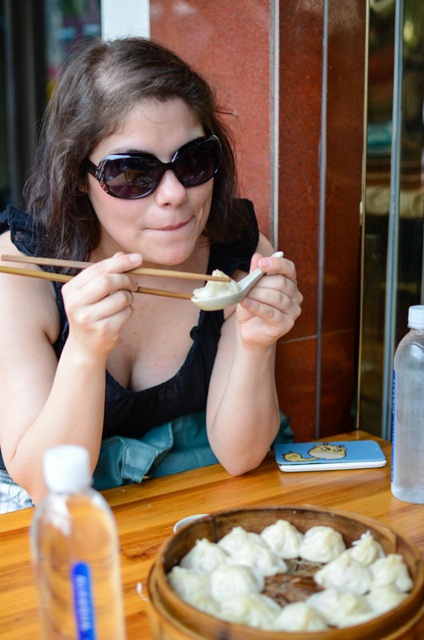
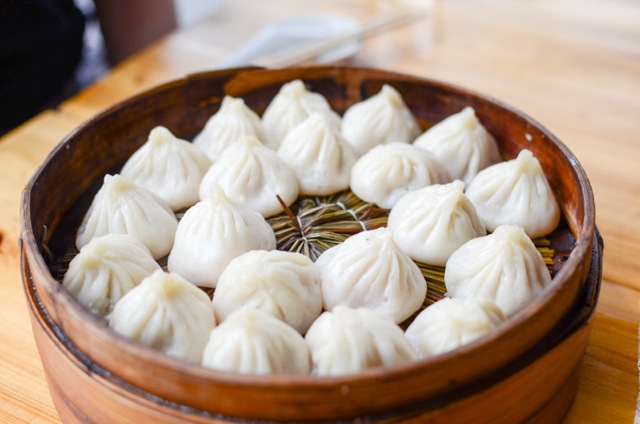
We came for none of these. We hadn’t gone to Nanxiang to sightsee, we were there to eat. Why? Because Nanxiang happens to be the birthplace of xiăolóngbāo.

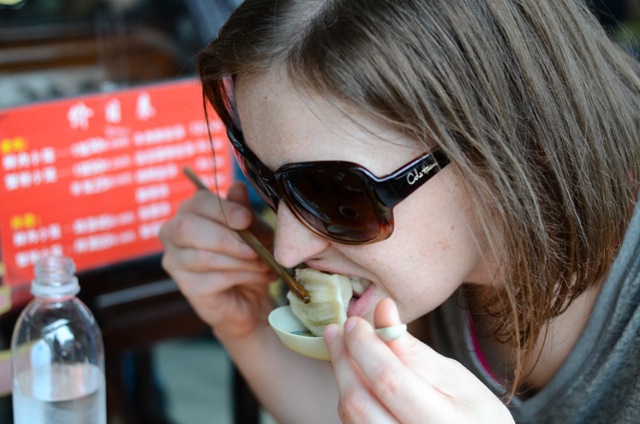
I’ve talked about my love of these dumplings before and even suggested a few spots to try them in Shanghai. But eating xlb from the source seemed like the perfect way to spend an afternoon.

DSC_6399.jpeg

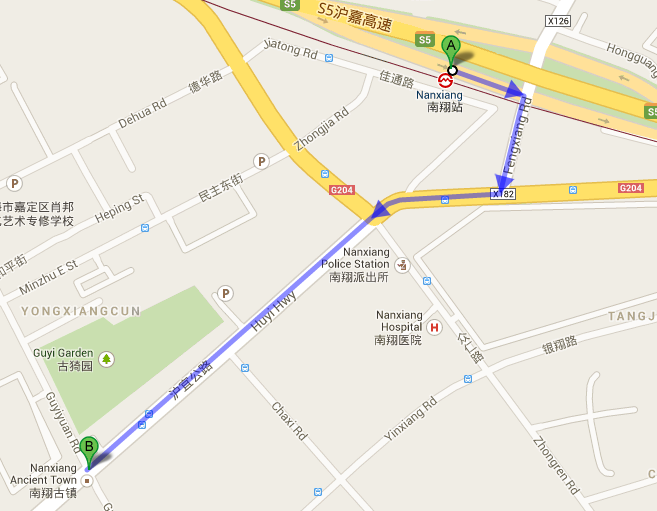
Reaching Nanxiang is easy. Simply take line 11 to the Nanxiang stop. Once there, take exit 1 and walk south along Huyi Gong Lu for 1.5 km (~10 minutes) to Guyi Garden. A short distance after that, you’ll encounter Guyiyuan Lu, which is where our culinary adventure began.

Screen Shot 2014-05-04 at 2.31.08 PM

I’m not joking when I say there are hundreds of xlb restaurants in Nanxiang. Hundreds. For the purpose of research, we ate at three restaurants. I’m clearly conducting a very scientific experiment.

Our first stop was the shop on the corner. Overly thin skins combined with overcooked dumplings meant that our xlb stuck to the steamer and ripped when picked up. Would not recommend.

DSC_6396.jpeg

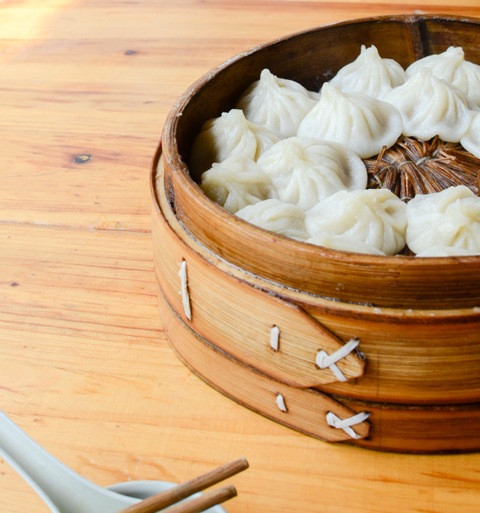
The second spot was the famous Gulong Restaurant (220 Guyiyuan Lu). While Nanxiang town may be the birthplace of xlb, Gulong is apparently the actual spot of creation. The dumplings here were beautifully prepared. The dough was slightly thicker and the flavor was sweet and savory. These were voted the best by our panel. FYI, the panel consisted of me, Matthew, and our friend C.

DSC_6405.jpeg

Our third stop was slightly further down Guyiyuan though I failed to notice the name. This restaurant offered numerous types of xlb and we opted for original pork as well as the crab variety. The crab version was a big hit and I quite liked the pork as well. These xlb received slightly less enthusiastic praise than the ones at Gulong, but we were also rather stuffed at this point. I think we had ordered and consumed close to 60 dumplings at this point.

DSC_6401.jpeg

I can feel you judging me.

Since we only sampled from a few restaurants, I have a feeling I will visit Nanxiang again. All in the name of research of course.

DSC_6412.jpeg

Thursday, February 27, 2014

Scam City Shanghai

Has anyone seen the show Scam City on National Geographic? The premise is simple, really. The host visits some of the world’s most popular cities in an effort to expose the darker side of tourism. He intentionally falls victim to swindlers to display local adaptations of popular scams such as pick pockets, expensive cab fares, or bars luring people in with adult entertainment at a high cost. Thankfully, I have been lucky enough not to be on the receiving end of any scams in Shanghai. However, I have friends (both visitors and locals) who have been. In an effort to keep others from following prey, here is a rundown of the most common scams in Shanghai.

Tea Ceremony/English student
You'll be approached in a tourist spot (this is very common in People's Square) by someone claiming they are an English student at a local university. Then comes the hook. The "student" will ask if you would mind helping them practice their English. In exchange, they will offer to treat you to a traditional Chinese tea ceremony. After your new friend orders snacks and tea, they will excuse themselves. The bill will arrive shortly after and you will be forced to pay the exorbitant cost of the meal.

There are some actual students who may approach you to practice English. Just let them know you will be picking the location.


Dropped Metro Card
This trick that has gotten many Shanghai newbies. The taxi driver will "accidentally" drop your transportation card as he attempts to hand it back to you. The taxi driver likely saw that you had a lot of money on your card and dropped it by his feet to quickly switch it for an empty one. An easy way to circumvent this dupe is by placing a sticker or other identifying marker on your card to confirm the correct one is handed back to you.

DSC_4451

Black Taxi 
As much as I complain about Shanghai taxis, only use the official ones. If a car (usually a black car that looks nicer than usual taxis) pulls up next to you and the driver asks where you want to go, or simply says "taxi?", you should walk away. These unmetered "taxis" seek out foreigners and charge outlandish fares, or worse.

Pickpockets
If you are hanging out on Nanjing Lu or other tourist spots, be on the lookout. Typically, a single man or a pair of women with babies strapped to their chests approach you from behind, unzip your bag, and make off with anything inside (many a friend has lost an iPhone this way). Remember to keep your bags in front of you and do not place valuables in your back pocket.

KTV
This con is mostly directed at men visiting Shanghai. If some pretty Chinese girls randomly ask if you want to go to KTV, the correct answer is NO. It's not uncommon for girls to find naive foreigners to go out drinking with them, run up a huge bill and then leave you to foot it. Generally speaking, any time you are going to a bar with strangers, you should always pay for drinks as you go. Running up a bar tab with people you don't know can be a dangerous exercise.


As with most things, if it seems too good to be true, it probably is. While most of these schemes will only result in a loss of your money (and perhaps dignity), many of them can become dangerous if you refuse to pay. If you find yourself in one of these situations, it is often best to pay the bill and then dial 110 for the police or 962288 for bilingual assistance. You should also follow up directly with your credit card company to quickly dispute the charges. Overall, I feel much safer in Shanghai than I did in large cities back in the US, however, all big cities come with some level of crime. It's best to be aware of the types of crimes you may encounter.

Thursday, January 9, 2014

Shanghai Confucian Temple

Most visitors (and even many expats) in Shanghai have likely never heard of this temple. It's one of my favorite locations not only for its beauty but also the tranquility that is in stark contrast to the rest of Shanghai. I've never seen more than a few other people here and I almost didn't share it with you for that reason. But I'm feeling generous today.

DSC_4356.jpeg

The Shanghai Confucian Temple, known as Wen Miao, is an ancient architectural complex dedicated to the worship of Confucius and the study of his texts. It was originally established in 1294 during the Yuan Dynasty.

DSC_4365.jpeg

The Temple was moved to different locations four times before it was reconstructed on its current site in 1855. The temple suffered damage during the Taiping Rebellion and further damage was intentionally inflicted by soldiers during the Cultural Revolution. The present buildings were reconstructed or restored in 1999 to celebrate the 2,550th birthday of Confucius.

DSC_4359.jpeg

The Temple complex consists of three parallel paths running south to north. The first path is for public worship and sacrifice; the center path is for scholars and studying; the third path is dominated by nature. 

DSC_4360.jpeg

You can read more about the temple on their website but the point to note is that this temple was not only a place of worship but a school. During ancient times, Wen Miao was the highest learning institution in Shanghai.

DSC_4372.jpeg

Visitors can leave wishes to Confucius during their visit, often asking for guidance or advice. My friend K wrote a note for her family while we toured.

image

Prior to exams, many students will visit the temple to ask Confucius for help in completing their examinations.

image

Today, the Temple is no longer dedicated to the study and research of Confucianism. Instead it is gaining fame as a secondhand book market. Every Sunday, thousands of local collectors swarm to the Shanghai Confucian Temple to bargain and buy, exchange or trade rare editions and old books.

To visit the Confucian temple, head to 215 Wenmiao Road near Zhonghua Road. Admission is 10 rmb per person.

Friday, November 29, 2013

Street Eats: Lillian Bakery

Chinese sweets often leave something to be desired. I've been offered dessert numerous times only to be disappointed when I am served a bowl of red bean paste. Good but not exactly the ice cream sundae I was hoping for.

Thankfully, one snack that never disappoints is an egg custard tart from Lillian Bakery.

IMG_0736.jpeg

A flaky crust filled with sweet, soft custard, these treats are the perfect afternoon snack. Or pre dinner appetizer. Or you know, a good idea anytime you happen to pass by the bakery.

IMG_0355.jpeg

My mother was so enthralled with these, we stopped three days in a row to try them. But at 4 rmb each (or $.66 USD), buying a box is never a regret.

IMG_0354.jpeg

Try out these delectable treats at one of many locations around town including:

868 Huaihai Zhong Lu
淮海中路868号

B1/F, New World Mall, 2-68 Nanjing Xi Lu
南京西路2-68号新世界城B1楼

1688 Sichuan Bei Lu
 四川北路1688号

Monday, October 14, 2013

Shanghai Propaganda Poster Art Center

Tucked away inside a residential apartment complex, the Shanghai Propaganda Poster Art Center is worth the extra effort it takes to find it.

The museum exhibits posters from the Maoist period of communist China, with a large focus on the Cultural Revolution. The museum's founder, Yang Pei Ming, started collecting the posters as a hobby and now shares his collection with others as he feels the posters "serve as a valuable historical document and provide an idealized account of a key period in global history". While not a huge museum, the museum is easily worth the small 20 rmb entrance fee.

image

The gift shop located inside is also full of gems. Featuring both original posters as well as reasonably priced prints, you can happily pick up your own piece of history. I was particularly drawn to the Shanghai Calendar Girl prints.

The museum is open daily from 10:00 am until 5:00 pm.

Address:
Basement, Bldg B
868 Huashan Lu, near Zhenning Lu
Xuhui district
 徐汇区华山路868号B号楼,近镇宁路

Tuesday, August 6, 2013

White Cloud Temple

Situated on the former location of Shanghai's western city gate, the White Cloud Temple or Bái Yún Gùan is a Taoist Temple located in Shanghai's Old City.

Screen Shot 2013-08-06 at 4.42.21 PM

To be honest, there isn't a whole lot of information available about the temple and only a handful of signs here are in English. The modest entrance fee of 10 rmb (~$1.63 USD) allows you to enter the temple and compare it to the many Buddhist temples located around Shanghai.

photo.JPG

The temple is made up of a number of rooms such as the Palace for the King of Medicine, the Founder’s Palace, and the Palace for the God of Fortune as well as offices and residential units for the monks. Once inside, you'll encounter incense burning worshippers, practicing monks, and a hall full of gilded deities.

photo.JPG

From my limited understanding, deities are assigned by birth year and you'll have fun trying to figure out which is yours. Mine inexplicably has feet coming out of his eyes.

photo.JPG

To visit White Cloud Temple, head to 239 Dajing Road, near the Old City Wall off Renmin Lu.

Wednesday, July 3, 2013

Shanghai Urban Planning Museum

The Urban Planning Museum, not surprisingly, displays Shanghai's urban planning and development. While there are a few exhibits of interest (I particularly liked the one on the Bund development over the past 100 years), the real reason to make this museum a spot to visit is for the large scale model of the entirety of urban Shanghai, showing existing buildings and approved future buildings.

IMG_1796

The massive displays takes up the entire third floor. I had fun trying to spot our apartment in this replica of our neighborhood.

IMG_1799

For those interested in urban planning, this museum is worth a quick stop, especially considering its convenient location just off People's Square. 

Admission: 30 rmb/person
Address: 100 Renmin Da Dao, near Xizang Lu
上海城市规划展示馆, 人民大道100号, 近西藏路

Thursday, June 27, 2013

Old City Wall

Thoughts of Shanghai often conjure up images of skyscrapers and rapidly changing modern landscapes. And while this is true, there are still pockets of Shanghai which reflect its storied past.

IMG_1892

The Old City refers to the once ancient walled city area of Shanghai. During the era of foreign concessions, the Old City remained exclusively Chinese, and foreigners seldom ventured here.

IMG_1891

The wall surrounding the Old City was constructed during the Ming Dynasty in 1553 to defend Shanghai against Japanese pirates. Following the course of today's Renmin Lu and Zhonghua Lu, the wall was 9 miles (14.5 km) long and 27 feet (8.1 m) high.

IMG_1898

The majority of the wall was dismantled in 1912. All that remains today is 50 meter section of wall at the intersection of Dajing Lu and Renmin Lu. I'd recommend handing over the 5 rmb (about .81 US cents) and walking on this small restored section of Shanghai's history. The view of surrounding buildings reminds you how far this city has come. 

IMG_1893

Related Posts Plugin for WordPress, Blogger...