Monday, May 19, 2014

Shanghai Botanical Gardens

Matthew and I first became acquainted with the Shanghai Botanical Garden during our training for the half marathon. It was a great place to run a few miles without having to worry about getting hit by a car. Plus the scenery is nice.

DSC_8508.jpeg

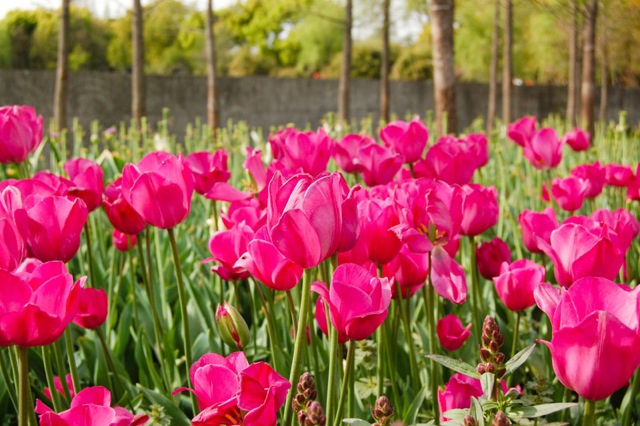
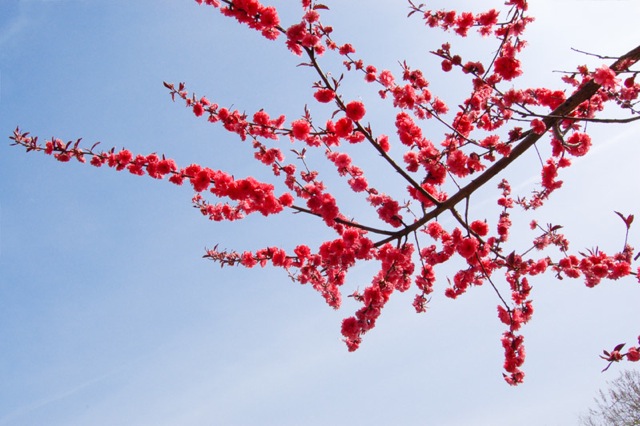
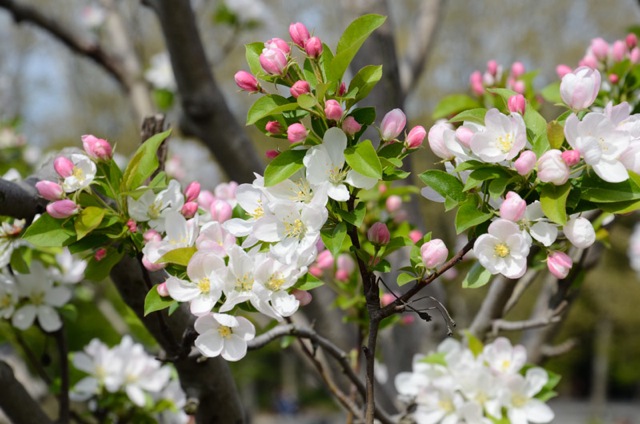
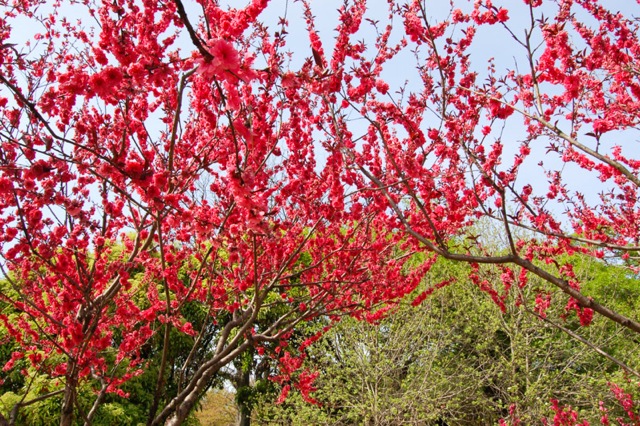
On a beautiful Spring day in April, we decided to visit the gardens once again to catch the cherry blossoms. This time, instead of lacing up our running shoes, we packed a picnic lunch and biked ourselves down to the gardens.

DSC_8448.jpeg

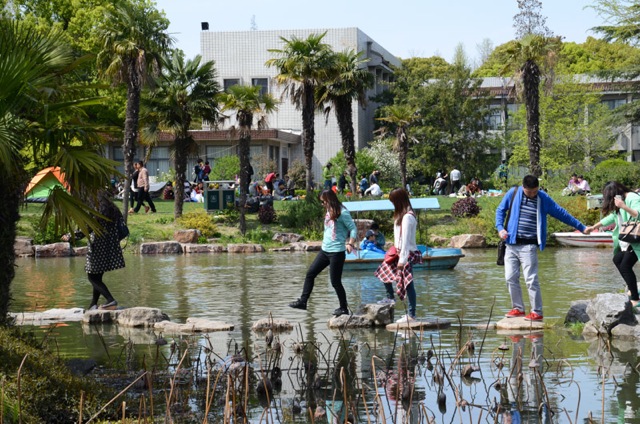
Mobs of other people apparently had the same idea.

DSC_5590.jpeg

Thankfully, the Botanical Garden is massive, covering over 240 acres of land (and holding over 5,000 species of plants) which meant we didn't have to search too hard to find a spot to sit down for our picnic lunch.

DSC_5615.jpeg

Like most parks in China, early mornings are the best time to witness tai chi partitioners, drummers, and community choir performances. You'll also find countless individuals on roller blades as well as the occasional juggler. We once even saw a juggler on rollerblades. Rebel.

DSC_5622.jpeg

The admission fee is 15 rmb to the Garden and 30 to the Conservatory. Or you can get a combined ticket for 40. We've never actually gone into any of the exhibits, but instead prefer to people watch outside.

DSC_8445.jpeg

The Botanical Gardens are located at 1111 Longwu Road, about a 15 minutes walk from the Shanghai South Railway Station Metro station.

Thursday, May 15, 2014

Lantern Festival

The Lantern Festival is a festival celebrated on the fifteenth day of the lunar calendar, marking the last day of the Chinese New Year celebrations. (Yes this was back in February, I'm super behind on posts).

The day's main activity is watching lanterns. Throughout the Han Dynasty, Buddhism flourished in China. The legend goes that an emperor heard how Buddhist monks would watch sarira, or the remains from the cremation of Buddha's body, and light lanterns to worship Buddha on the 15th day of the first lunar month. The emperor ordered lanterns to be lit in the imperial palace and temples to show respect to Buddha on this day. Later, the Buddhist rite developed into a grand festival and expanded to the whole of China.

Lantern Festival in Xujiahui Park #cny

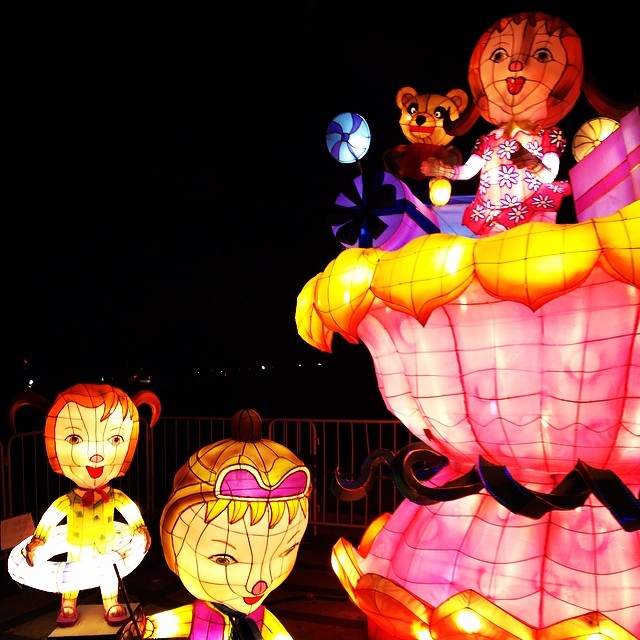
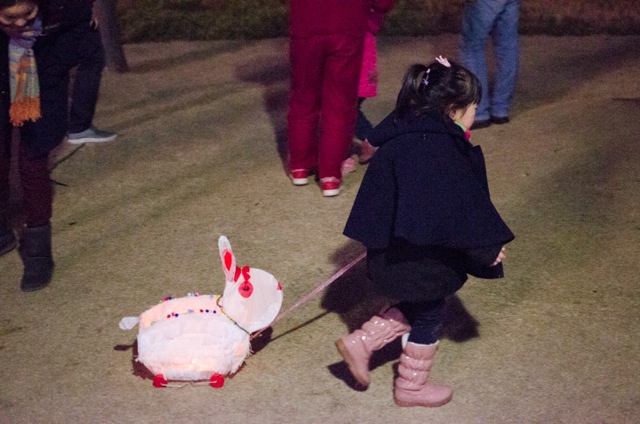
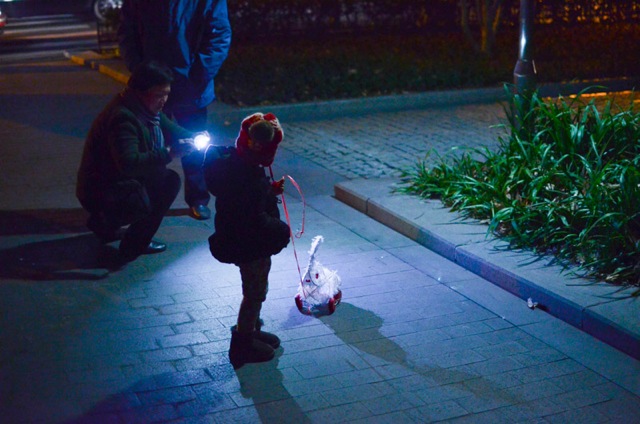
During the Lantern Festival, lanterns of various shapes and sizes are displayed in the streets, parks and temples. Children will hold self-made or bought lanterns and solve riddles on the lanterns. In ancient times, the lanterns were fairly simple, and only the emperor and noblemen had large ornate ones. In modern times, lanterns have been embellished with many complex designs. For example, lanterns are now often made in the shape of animals or are red to symbolize good fortune.

Fwd:

Matthew and I decided to partake in the Lantern Festival near our apartment in Xujiahui Park. The park was crowded with people looking at the large lantern displays, as well as children carrying their personal lanterns.

DSC_5495.jpeg 

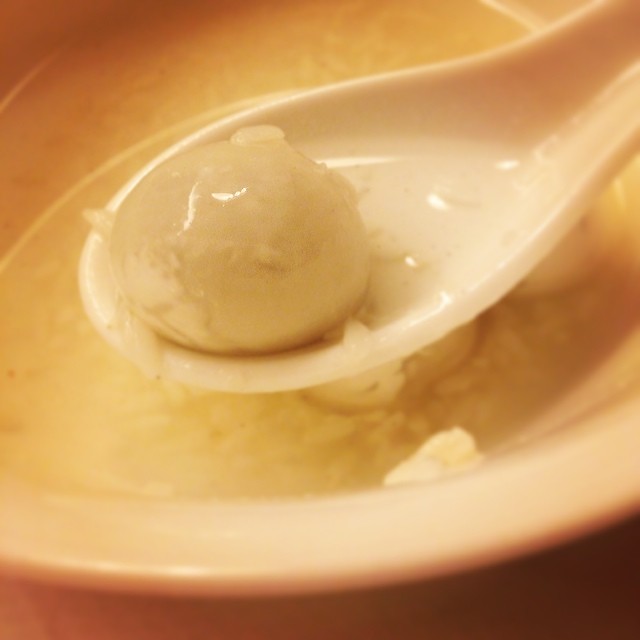
After wandering through the crowds, we made our way back to the apartment for a bowl of tāng yuán, small dumpling balls made of glutinous rice flour filled with rose petals, sesame, bean paste, jujube paste, walnuts, dried fruit, or sugar. Tāng yuán in Chinese has a similar pronunciation with tuán yuán, meaning reunion. So people eat them to denote union, harmony and happiness for the family for the next year.

Celebrating the last day of CNY with some tang yuan

Or you just eat them because they taste good.

Monday, May 5, 2014

Day Trip: Nanxiang Town

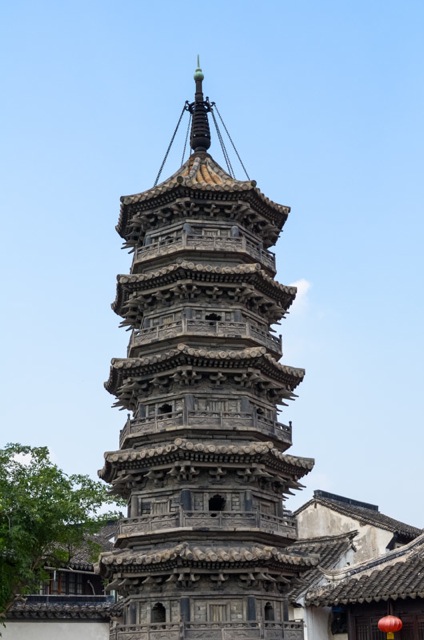
Thursday was Labor Day in China, meaning that we were all granted with a few days off work. Despite the fear of crowds, we decided to venture out of downtown to Nanxiang Town in the northern Jiading District of Shanghai. Nanxiang is a sleepy suburb that boasts attractions such as Guyi Gardens, Nanxiang Twin Towers, Ancient Town and Yunxiang Temple.

DSC_6420.jpeg

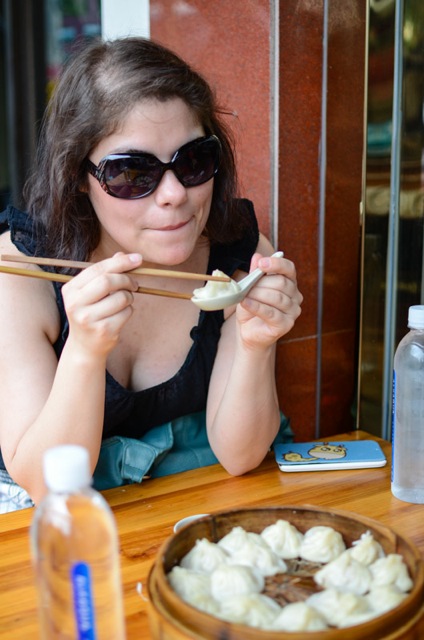
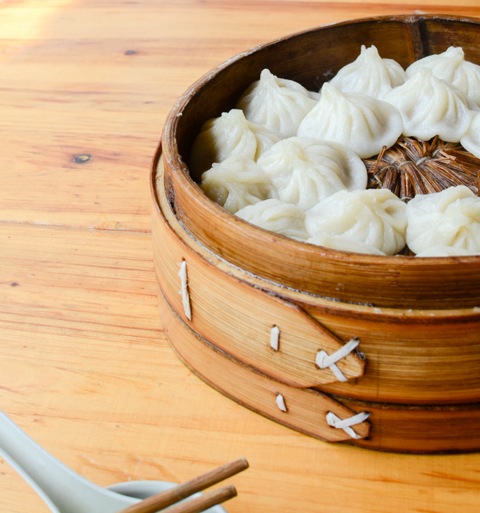
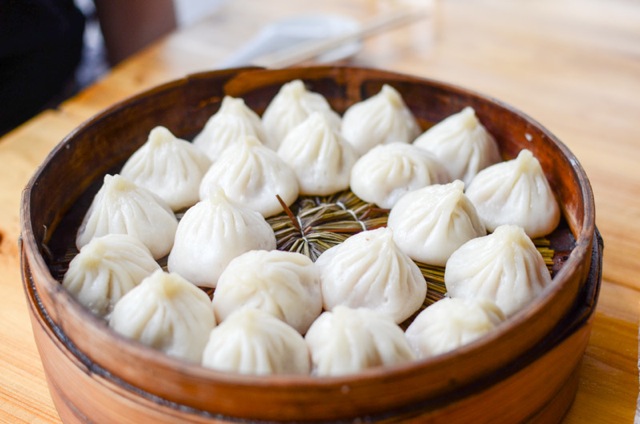
We came for none of these. We hadn’t gone to Nanxiang to sightsee, we were there to eat. Why? Because Nanxiang happens to be the birthplace of xiăolóngbāo.

I’ve talked about my love of these dumplings before and even suggested a few spots to try them in Shanghai. But eating xlb from the source seemed like the perfect way to spend an afternoon.

DSC_6399.jpeg

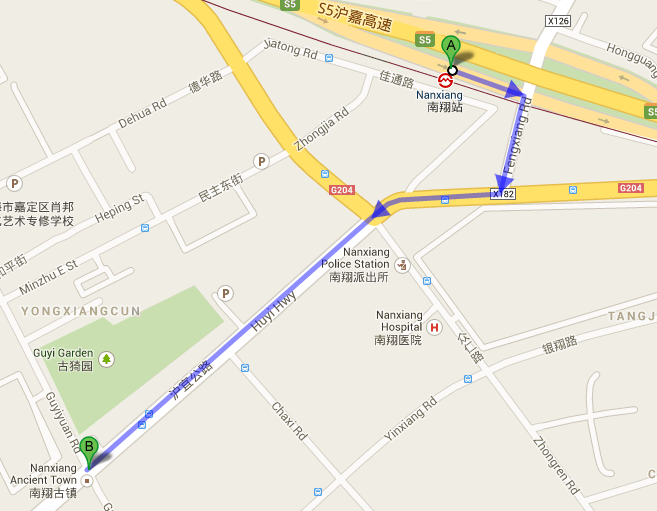
Reaching Nanxiang is easy. Simply take line 11 to the Nanxiang stop. Once there, take exit 1 and walk south along Huyi Gong Lu for 1.5 km (~10 minutes) to Guyi Garden. A short distance after that, you’ll encounter Guyiyuan Lu, which is where our culinary adventure began.

Screen Shot 2014-05-04 at 2.31.08 PM

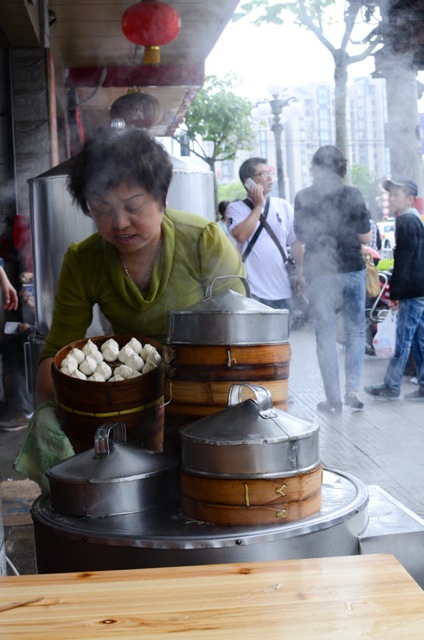
I’m not joking when I say there are hundreds of xlb restaurants in Nanxiang. Hundreds. For the purpose of research, we ate at three restaurants. I’m clearly conducting a very scientific experiment.

Our first stop was the shop on the corner. Overly thin skins combined with overcooked dumplings meant that our xlb stuck to the steamer and ripped when picked up. Would not recommend.

DSC_6396.jpeg

The second spot was the famous Gulong Restaurant (220 Guyiyuan Lu). While Nanxiang town may be the birthplace of xlb, Gulong is apparently the actual spot of creation. The dumplings here were beautifully prepared. The dough was slightly thicker and the flavor was sweet and savory. These were voted the best by our panel. FYI, the panel consisted of me, Matthew, and our friend C.

DSC_6405.jpeg

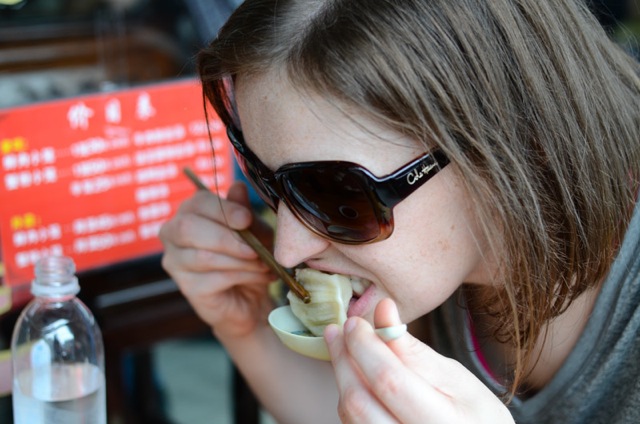
Our third stop was slightly further down Guyiyuan though I failed to notice the name. This restaurant offered numerous types of xlb and we opted for original pork as well as the crab variety. The crab version was a big hit and I quite liked the pork as well. These xlb received slightly less enthusiastic praise than the ones at Gulong, but we were also rather stuffed at this point. I think we had ordered and consumed close to 60 dumplings at this point.

DSC_6401.jpeg

I can feel you judging me.

Since we only sampled from a few restaurants, I have a feeling I will visit Nanxiang again. All in the name of research of course.

DSC_6412.jpeg

Monday, April 21, 2014

My Strange Addiction

I have a confession to make. I've been harboring a secret from all of you. Something that I have been too ashamed to share with you until now. My name is Kristin and I am an addict.

What kind of addiction do I have? Well, that's the shameful part.

It's to cat shirts.

I've hinted at my little habit in the past by posting photos such as this.


But now I'm coming clean about my issues with cat shirts. Buying them, wearing them, hoarding them. When I see a cat shirt on the street, my heart speeds up a little and my brow gets sweaty. I start to envision all the places I could wear that cat shirt. The adventures we could take together.

photo.JPG

This problem with cat shirts started long before I came to Shanghai though. As a child, my mother happily gave in to my desire to be adorned in feline attire and I wore cat as my signature style.

My sister was no help with my dependency either. She not only enabled me and supported my decision to pick up this beauty from the Jason Wu for Target Collection shortly before we moved to China but she bought me a cat shirt for Christmas.


So I'm going cold turkey. I'm taking a stand. No more cat shirts.

But no one said anything about cat dresses.

945982_10151654127822463_1065736909_n

Friday, April 11, 2014

Shanghai Eats: Bellagio

I'm just going to say it, the Taiwanese could teach Mainlanders a thing or two about sweets. One such example is in the delectable desserts offered at the Taiwanese restaurant chain, Bellagio.

While I've come here numerous times for my main meal (I recommend the three cup chicken, sānbēijī), it's their desserts that have me coming back for more.

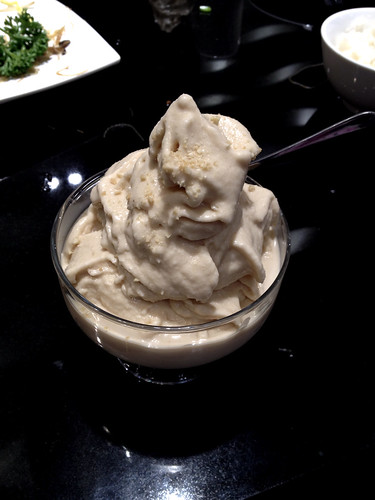
My favorite treat happens to be their ice smoothies. The smoothies consist of ice, condensed milk, and a topping of your choice. My personal favorite is the peanut, huāshēngbīngshā, though I've heard raves about the mango version, mángguǒbīngshā, as well.

Picfx.jpg

I can only imagine the consistency and taste of this velvety treat is what the love child of a snow cone and ice cream would resemble. And it's delicious.

To visit Bellagio, check out one of the numerous locations around town including:

Gubei Branch: No. 778, Gold City Street, Changning District (near South Gubei Road)

Xin Tian Di Branch: No. 68, Taicang Road, Huangpu District (near Songshan Road)

Shuicheng Branch: No. 101, South Shuicheng Road, Changning District (near Hongqiao Road)

Xikang Branch: No. 111, Xikang Road, Jing'an District (West Beijing Road)

Tuesday, April 8, 2014

Roofied in Cambodia

As you are probably able to deduce from the title of this post, I was drugged in Siem Reap. But before you get too concerned for my well being, you should know that I know the person who did it.

It was my husband. 

Ok, maybe that doesn't make you feel any better. How about if I told you it was an accident? And that he was trying to treat my food poisoning?

Maybe I should back up a minute and try to explain this a little better.

Only a few short hours after arriving in Cambodia for Chinese New Year, we were partaking in a sunrise tour of Ankor Wat. The colors were vivid, the views incredible, and all seemed right in the world.

Except for my stomach. What started as a slow churning progressed to full nausea as we walked about. At our second temple, the smell of incense set me off and I desecrated the ancient temple grounds with the contents of my stomach.

Fast forward a few hours and my body was still attempting to eliminate the ill advised street noodles I had consumed the night before. With nothing left to purge, I was vomiting bile and quickly becoming severely dehydrated. 

As this wasn't my first bout of food poisoning, we knew that getting anti nausea drugs into my system would help immensely. My loving husband went to a local pharmacy and explained my condition. The pharmacist handed him packets of Ciprofloxacin (for infection) and Lorazepam (for nausea).

Lorazepam is a Benzodiazepine (benzo, for short), a class of drug commonly used as tranquilizers and sleeping pills. Benzos are used to sedate hospital patients but can also cause difficulty with concentration, dizziness and difficulty with walking. Oh and it can cause amnesia. You may be more familiar with other benzos like Valium and Rohypnol. In the U.S., Lorazepam is a controlled substance. But in Cambodia, my husband was able to purchase it for a mere $5.

So yeah, my husband sedated me for two days. I had trouble staying awake, was unaware of what was going on, and couldn't walk myself through the airport. In fact, I have no memory of the photo below being taken, or even visiting that temple. On the positive side, I can say that taking the Lorazepam did stop me from vomiting. So there's that.

DSC_5331.jpeg

Friday, April 4, 2014

How to: Watch Foreign TV in China

I enjoy watching TV. Probably a little too much. The hours (and brain cells) I lost while watching The Real Housewives series will never come back. Which is why I was worried about how I would be able to watch my favorite TV shows from abroad. 

So what are your options if you want to watch American or other foreign TV shows? If you live in a large expat residential compound, you may have access to a few international channels but will be mostly limited to Chinese TV shows. But like most things in China, there are a few hacks that will allow you to get around this obstacle and resume your couch potato ways.

Use your VPN to Stream Online
A VPN will replace your actual IP address with that of the VPN's, making it appear to websites like Hulu and Netflix that you are physically located within the United States (if you pick a US spot for your VPN that is). Just turn on your VPN and you instantly have access to these websites as well as those of all the major TV networks and their online videos. The downside to this solution is that China has notoriously slow internet connections for non-Chinese websites. Video streaming is often slow with frequent stops for buffering. While convenient, this isn't the best way to watch the newest episode of House of Cards.

Stream Online Through Chinese Websites
This is my preferred method of watching TV. You simply visit one of the Chinese website like Youku, PPTV, or Sohu with your regular internet connection (not on your VPN) and browse away. The sites can be a little intimidating if your Chinese isn’t great but many shows can be searched by their English names (or you can download Google Chrome which will automatically translate the pages for you). Because the servers for these sites are located in China, streaming is quick and often without any buffering needed. Each of the sites offers slightly different TV shows, so it is worth bookmarking each of them.

Buy from the DVD Store
Pretty much every recent movie and TV series is available at your local DVD stores. Yes, you will need to wait until the end of the season to watch the whole series, but frankly, I prefer this method. Then I can speed my way through an entire season of Game of Thrones in 3 days and not have to wait weeks to find out what happens next.

Enhanced Cable or Satellite 
Enhanced cable is handled right through your regular cable TV provider and will usually offer non-Mainland Chinese shows such as HBO, HK MTV, National Geographic, and a variety of news channels such as CNN, BBC, MSNBC.

I do not have personal experience with this, however, I have heard that you can obtain a satellite dish and a hacked box from a local provider. Usually you buy the dish and the box for a couple thousand RMB and then have access to thousands of TV stations. Sometimes a small annual online subscription enables automatic updates to the hacked box.

Slingbox
Another popular option is Slingbox. Slingbox is a device that connects to your TV and streams the signal to another machine in real time, anywhere in the world. Obviously this is only a solution if you maintain a house with a cable/satellite service back home, or if you have a friend or family member that wouldn’t mind you using theirs.

With all these TV watching options, you have no reason not to be well versed in the latest happenings at Downton Abbey.

DISCLAIMER: I recognize that some of the methods above may be construed as advocating media piracy. To be clear in my position on this, I view the items above simply as tools by which to obtain various television shows and movies. It is your choice whether you want to utilize these methods, I am simply providing you with information regarding how some people access foreign media in China.
Related Posts Plugin for WordPress, Blogger...